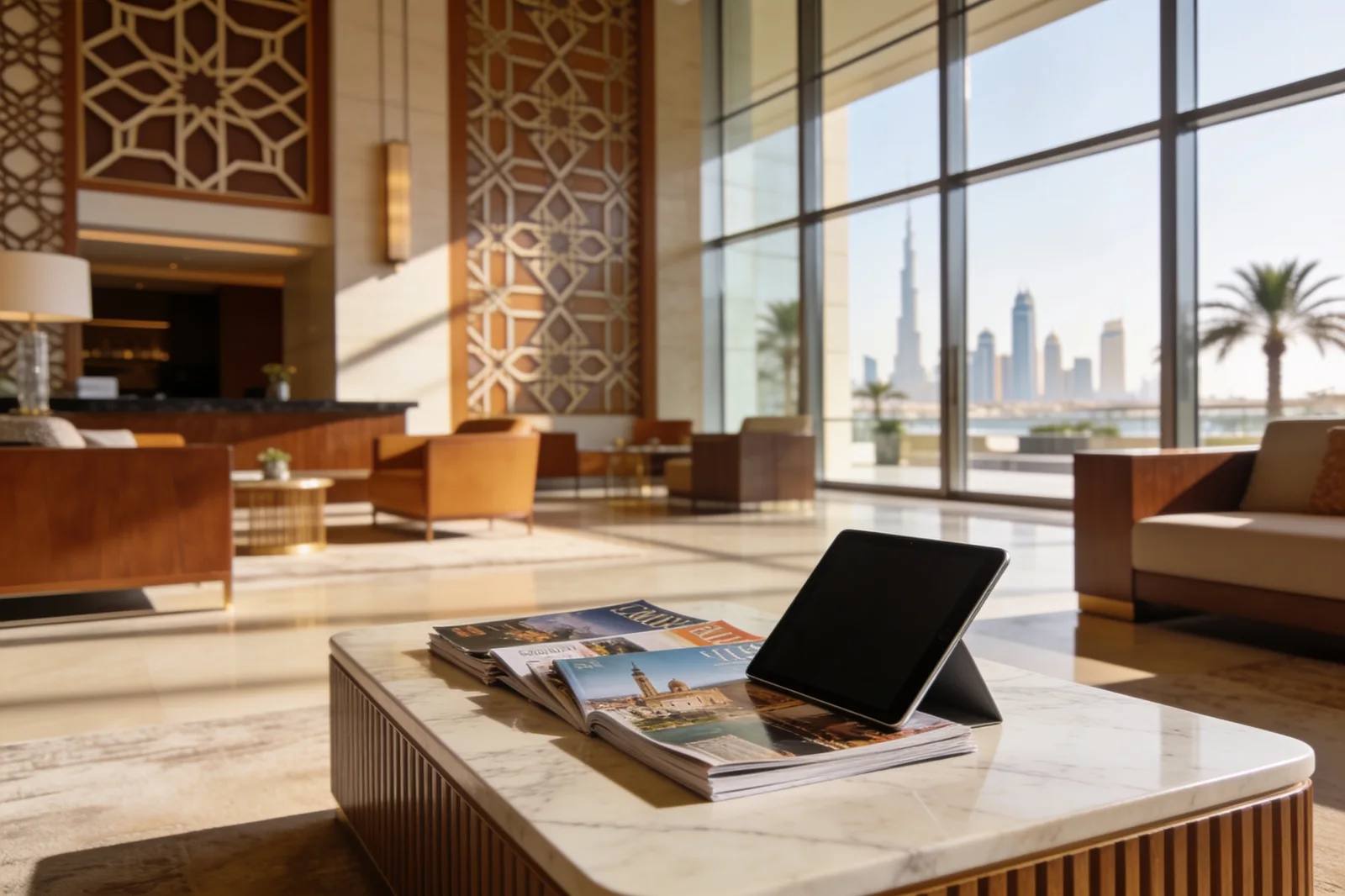
The best boutique hotels in Dubai cluster into five distinct neighborhood personalities: Downtown for urban energy, JBR for beachfront social life, Al Quoz and d3 for creative immersion, Old Dubai for heritage, and Palm Jumeirah for secluded exclusivity. Your ideal match depends on whether you prioritize skyline views, cultural depth, creative community, or private coastline. See hotels in Dubai across all these areas to compare current availability.
What makes a hotel "boutique" in Dubai
Boutique hotels compete by embedding themselves in specific neighborhoods and reflecting those surroundings in their architecture, materials, and guest experiences. Cultural influences shape Dubai's boutique hotels in ways that standard properties rarely attempt, from wind-tower ventilation references in Old Dubai to industrial concrete finishes in Al Quoz.
When evaluating whether a property truly fits the boutique label, look past the marketing copy and examine the staff structure. Large chain hotels often rely on standardized scripts for check-in and service recovery. Boutique properties typically employ generalists who handle multiple roles, from front desk to local recommendations. This flexibility allows for faster problem-solving but can lead to slower response times during peak hours if the team is stretched thin.
Check recent reviews specifically for mentions of staff names or personalized interactions. If guests consistently praise specific employees by name, it suggests a culture where individuals have agency to make decisions without escalating to managers. Conversely, if reviews complain about rigid policies despite small scale, the property may be operating with corporate oversight that undermines its independent character.
Downtown Dubai: urban chic and iconic proximity
Design-focused stays often feature distinct culinary concepts.
The trade-off is density. Downtown delivers constant motion, light, and construction cranes. It rewards visitors who plan to spend evenings at rooftop bars, attend performances at Dubai Opera, or shop extensively. It frustrates those seeking morning quiet or spontaneous beach access. Couples and solo travelers typically adapt more easily than families with young children who need running space and pool downtime.
See hotels in Dubai in the Downtown cluster if your itinerary centers on landmarks and urban exploration.
Navigating Downtown requires understanding its vertical geography. Many boutique hotels here occupy mid-rise buildings rather than skyscrapers, which affects noise levels and view quality. Ask specifically which floor your room occupies. Lower floors often face street-level construction or pedestrian traffic, while upper floors might catch wind noise from high-rises nearby. A quiet room in this dense area usually means selecting an interior-facing unit or paying a premium for soundproofing upgrades.
Transport logistics also differ from other neighborhoods. The metro connects directly to major malls, but last-mile travel to smaller boutique entrances often involves walking through covered tunnels or taking short taxi rides. Map the exact distance from the nearest station exit to the hotel lobby. In summer, even a five-minute walk between shaded areas can feel excessive without air-conditioned transit options.
Jumeirah Beach Residence and The Walk: coastal social life
JBR combines direct beach access with a pedestrian promenade of restaurants. The atmosphere is social: pool decks function as daytime scenes, and restaurants offer shared tables.
This neighborhood works best for travelers who want beach time without leaving the city. Families appreciate the promenade for evening walks and the concentration of casual dining. Solo travelers and couples find conversation starters at beach clubs and rooftop pools. The downside is noise and scale: JBR is high-rise dense.
Beach access in JBR varies significantly between properties. Some hotels manage private sections of sand with dedicated loungers and towel service, while others simply provide beach passes for public areas. Clarify this distinction before booking. Public beach zones can become crowded quickly, especially on weekends, reducing the sense of exclusivity that draws many travelers to boutique stays. If privacy matters, confirm whether the hotel controls any section of the shoreline or if you will share space with resort guests from neighboring towers.
The promenade itself changes character throughout the day. Mornings offer calm jogging paths and empty cafes, while evenings transform into bustling outdoor dining scenes. Noise levels rise after sunset as music from restaurants carries across the water. Travelers sensitive to sound should request rooms facing away from The Walk or verify window insulation quality. Early arrivals may find limited parking options near hotel entrances due to heavy foot traffic and delivery vehicles.
Alserkal Avenue and Dubai Design District: the creative perimeter
Al Quoz hosts a cultural scene that has become a genuine destination. Galleries mount contemporary shows, while cafes serve coffee. Visit Dubai highlights the area's artistic vibrancy.
Dubai Design District (d3) sits adjacent, a planned creative cluster where fashion studios, product designers, and digital agencies share canal-side space.
This zone attracts travelers who prioritize cultural engagement over beach relaxation. You will find more conversation about emerging artists than about fountain shows. The neighborhood suits solo travelers and couples comfortable with independent exploration. Families may find fewer structured children's activities than in JBR or Palm Jumeirah.
- Direct access to galleries, studios, and independent retail
- Canal-side walking paths with fewer tourists than beach zones
- Restaurants that prioritize ingredient sourcing and experimental menus
Less suited for traditional resort seekers
- No direct beach access; taxi or metro required for coastline
- Evening entertainment skews intellectual rather than spectacle-driven
- Limited options for young children's structured activities
Old Dubai: Deira and Al Fahidi for cultural immersion
Al Fahidi Historical Neighbourhood sits along Dubai Creek, illustrating historic Dubai life and housing art exhibits, museums, and dining venues, according to the UAE Ministry of Economy and Tourism. The area's heritage buildings, with their wind towers and coral-stone walls, have been converted into small hotels that emphasize traditional Arabic architecture and courtyard living.
Deira, across the creek, offers the Gold Souk and spice markets accessible by abra, the wooden water taxis that remain functional transport rather than tourist decoration. Boutique properties here tend smaller, often under fifty rooms, with rooftop terraces overlooking the creek's dhow traffic. The experience is deliberately slower: call-to-prayer audio, early-morning fish markets, and restaurant conversations in Arabic rather than exclusively English.
This neighborhood rewards travelers who treat cultural immersion as the primary purpose of their trip. It challenges those who expect fluent English communication, international cuisine at every meal, or polished hotel infrastructure. Couples and solo travelers with patience for sensory intensity find depth here. Families with young children may struggle with narrow lanes, limited stroller access, and fewer pool facilities.
Staying in Old Dubai demands adjustments to daily rhythms that differ from modern districts. Many shops and restaurants close during midday heat, reopening later in the afternoon. Plan activities around these schedules to avoid wandering through shuttered streets. Additionally, prayer times affect accessibility; some historic sites pause visits during calls to prayer, requiring flexible timing for tours. Build buffer time into itineraries to accommodate these pauses without feeling rushed.
Currency exchange practices also vary here. While credit cards work at most hotels, smaller markets and traditional eateries prefer cash. Exchange rates at local banks in Deira often beat airport kiosks, but fees apply. Carry sufficient dirhams for daily expenses, including abra fares and souk purchases, to navigate the area smoothly. Keep small bills handy, as change can be scarce in busy stalls during peak shopping hours.
Palm Jumeirah: exclusive island retreats
Properties here emphasize privacy, private beaches, and high-end relaxation rather than social scene-making. The island's geography enforces seclusion: a single trunk road, controlled access points, and waterfront facing away from the mainland's visual clutter.
This environment suits travelers who prioritize recovery and discretion. The typical guest wants guaranteed tranquility, personal pool space, and minimal interaction with crowds. Honeymooners, anniversary travelers, and executives decompressing from intensive schedules fit this profile. The trade-off is isolation: restaurant variety requires leaving the island, and spontaneous neighborhood exploration is essentially impossible.
| Neighborhood | Solo traveler | Couple | Family |
|---|---|---|---|
| Downtown Dubai | Excellent for nightlife and meeting people | Strong for dining and landmark access | Challenging; limited green space |
| JBR and The Walk | Good social scene, easy navigation | Balanced beach and city access | Best beachfront convenience |
| Al Quoz / d3 | Ideal for gallery hopping alone | Strong for shared cultural discovery | Limited child-specific infrastructure |
| Old Dubai | Rewarding with Arabic language basics | Intimate, story-rich environment | Difficult with strollers, limited pools |
| Palm Jumeirah | Isolating unless seeking pure rest | Optimal for privacy and romance | Good with resort kids' programs |
New openings expanding the list of best boutique hotels in Dubai
Several developments are broadening neighborhood options for 2026. Other properties are progressing along the Dubai Water Canal in Business Bay, adding another option between Downtown and the creek. New hotels in Dubai continue to open across these neighborhoods, according to Visit Dubai's tracking.
These additions matter for booking strategy. New properties often launch with introductory rates and more flexible cancellation policies to build review volume. They also cluster in transitional zones, such as Business Bay and Media City, that may offer better value than established neighborhoods while maintaining reasonable access to beaches and landmarks.
Booking strategy: timing, platforms, and verification
Dubai's seasonal pattern is extreme. Peak winter, roughly November through March, brings comfortable temperatures and premium pricing. Summer months deliver significant rate reductions but require acceptance of 40°C heat and heavy air-conditioning dependency. Shoulder seasons, April-May and September-October, offer compromise: manageable warmth, thinner crowds, and moderate rates.
For boutique properties specifically, curated booking platforms often provide better context than generic engines. They aggregate properties by design philosophy, neighborhood character, and verified amenity details rather than star ratings alone. Cross-reference photographs against recent guest reviews to confirm that design elements shown in marketing still appear well-maintained. Boutique hotels age faster than chain properties when ownership defers maintenance.
Verify specific amenities that matter to your stay. "Pool access" may mean a plunge pool on a crowded terrace rather than a landscaped deck. "Beachfront" sometimes indicates across-a-highway proximity. "Complimentary breakfast" at boutique properties often means a curated local menu rather than buffet volume. Contact the property directly for clarification if your decision hinges on a specific feature.
See hotels in Dubai with filtering by neighborhood and design focus to narrow options efficiently.
Final selection checklist
- Match neighborhood to daily rhythmBeach mornings require coastal location; evening gallery openings require Al Quoz or d3 proximity. Splitting your stay across two neighborhoods often costs less than constant taxi commuting.
- Verify design maintenanceBoutique properties with opening dates more than five years ago need recent review confirmation that signature elements remain intact.
- Confirm cancellation flexibilityDubai's event calendar, including COP meetings and major sports fixtures, can disrupt normal availability. Flexible rates protect against schedule changes.
- Check direct booking benefitsMany boutique properties offer room upgrades, late checkout, or dining credits for direct reservations that offset platform convenience.
- Map restaurant reservationsHigh-demand tables at neighborhood restaurants book weeks ahead. Confirm concierge access or independent booking capability before arrival.
Your neighborhood choice shapes your Dubai experience more than your specific hotel. A well-located property that matches your daily intentions will outperform a celebrated design hotel in the wrong district. Dubai's iconic architecture appears across multiple neighborhoods; prioritize the surrounding community that fits your travel rhythm.