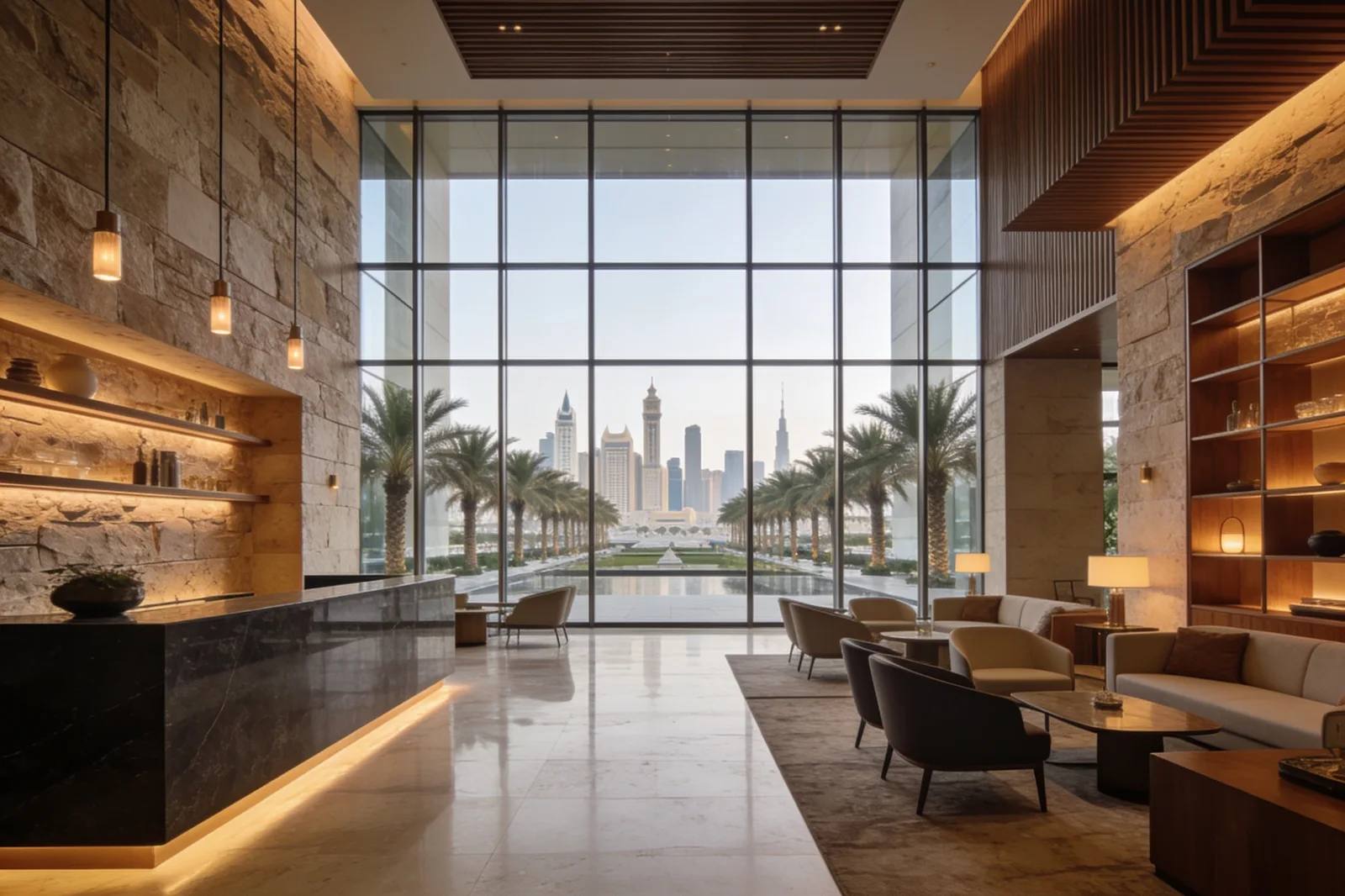
The best boutique hotels in Dubai distinguish themselves through architecture that is as intentional as the service inside them. From Zaha Hadid's sculptural glass void at ME Dubai to Foster + Partners' interlocking vertical gardens at The Lana and the restored coral-stone wind towers of Al Shindagha's heritage houses, these properties treat structural design as the primary luxury amenity. For travelers who choose hotels based on spatial experience rather than star ratings alone, Dubai now offers a genuine spectrum of design-led stays.
How Dubai's boutique hotels use architecture as a differentiator
Boutique properties in Dubai have moved beyond the formula of compact size plus premium toiletries. The city's 19.59 million international visitors in 2025, according to the Dubai Department of Economy and Tourism, now encounter hotels where the building itself is the reason to book.
Three trends define this shift. First, global starchitects are treating boutique scales as laboratories for experimental form, with ME Dubai being the clearest example. Second, heritage restorations are converting 19th-century merchant houses into intimate properties where vernacular construction techniques become aesthetic features. Third, waterfront towers are integrating passive environmental design, vertical gardens, and brise-soleil facades that respond to Gulf climate conditions while creating distinctive visual identities.
The result is that "boutique" in Dubai no longer signals merely small or exclusive. It signals architecturally specific. You can see hotels in Dubai across this full architectural range, from skyscraper-integrated boutiques to low-rise heritage conversions.
Five boutique hotels defined by their architectural signatures
ME Dubai at The Opus: Zaha Hadid's complete vision
ME Dubai remains the only hotel globally where Dame Zaha Hadid designed both the complete exterior architecture and all interior spaces. The building, The Opus, consists of two glass towers connected at the podium and via a three-storey skybridge suspended 71 metres above ground, creating an eight-storey central void of amorphous, curvilinear form.
The precise orthogonal geometries of the Opus' elemental glass cube contrast dramatically with the fluidity of the eight-storey void at its centre.
Christos Passas, Project Director, Zaha Hadid Architects
The 93 rooms and suites contain custom organic furniture from Zaha Hadid Design, including Petalinas sofas, Ottomans pods, and Vitae bathroom fixtures. The four-storey naturally lit lobby atrium beneath the suspended void functions as the hotel's central spatial event. Guests do not merely occupy a Zaha Hadid building; they inhabit her complete environmental design. For more on how cultural contexts shape such luxury hotel design, see our analysis of how cultural travel experiences shape luxury hotel design.
The Lana, Dorchester Collection: Foster + Partners' vertical gardens
Opened in February 2024 along Marasi Bay, The Lana features interconnected tower architecture by Foster + Partners with interior architecture by Parisian studio Gilles & Boissier. The property won the Hotel Design, Middle East & Africa Award at the International Hotel & Property Awards 2025, achieved MICHELIN Key recognition, and was named UAE's Leading Luxury Hotel 2025 by the World Travel Awards.
The structural signature is seven vertical gardens integrated into the interlocking tower form, functioning as passive thermal buffers against desert heat. A rooftop infinity pool extends the spatial sequence skyward. The flagship Lana Royal Suite spans 355 square metres overlooking Marasi Bay and the Burj Khalifa skyline.
Arabian Boutique Hotel: vernacular architecture as luxury
Opened in February 2024 in the historic Al Shindagha quarter, the Arabian Boutique Hotel occupies two restored heritage residences once belonging to Thani bin Abdullah Al-Rumaiti. The property offers 20 rooms centered around an open courtyard, with an Al Barjeel suite positioned directly beneath a functional traditional wind tower.
Dubai may have been a mere blip on the map 30 years ago, but its history and culture run deep. It was the crossing between East and West, the main route for pearl business and an archaeological site.
Ali Alrais, Co-owner, Arabian Boutique Hotel
The wind tower, or barjeel, is not decorative. It channels prevailing breezes into the courtyard and suites below, demonstrating how traditional Emirati climate adaptation becomes a contemporary luxury feature. Coral stone walls, raw timber, and sand-toned plasterwork maintain material authenticity throughout.
Al Seef Heritage Hotel: dispersed Arabian bayts
The Al Seef Heritage Hotel, Curio Collection by Hilton, disperses 190 rooms across traditional Arabian bayts along Dubai Creek. The property incorporates raw timber, sand-toned plasterwork, and majlis settings that reproduce the social architecture of historic Emirati domestic life.
Following a scheduled renovation closure from May 15 to August 31, 2026, the hotel reopened for autumn 2026 guests with phased property enhancements. Sources vary on the exact number of historical bayts comprising the property: official Hilton literature lists 10 bayts, while several architectural critiques state 22 bayts throughout the Al Seef promenade. The discrepancy reflects the dispersed, non-consolidated nature of the property's planning.
Bulgari Resort Dubai: coral-pattern brise-soleil on Jumeira Bay Island
Spread across 1.4 million square feet on a private seahorse-shaped island, Bulgari Resort Dubai comprises 101 hotel rooms and suites plus 20 beachfront villas. ACPV ARCHITECTS Antonio Citterio Patricia Viel designed a signature coral-pattern brise-soleil facade that screens out heat and casts dynamic geometric shadows across Arabescato marble and thin oak wall panels.
The shaded sea-view terraces demonstrate how environmental performance and aesthetic distinction can coincide. The coral motif references regional marine ecology while functioning as a practical solar control device.
Comparing aesthetics: modern minimalism versus heritage revival
| Characteristic | Modern Minimalism (ME Dubai, The Lana) | Heritage Revival (Arabian Boutique, Al Seef) |
|---|---|---|
| Primary materials | Glass, steel, Arabescato marble, engineered oak | Coral stone, raw timber, sand-toned plaster, palm frond |
| Spatial organisation | Vertical towers, skybridges, rooftop pools | Courtyards, wind towers, dispersed bayts |
| Climate strategy | Vertical gardens, brise-soleil, passive daylighting | Natural ventilation, thermal mass, shaded arcades |
| Design authorship | Global starchitects (ZHA, Foster + Partners) | Local heritage conservation with Emirati ownership |
| Guest capacity | 93–200+ rooms | 20–190 rooms |
| Typical view | Marina, skyline, Burj Khalifa | Creek, historic district, courtyard garden |
The choice between these approaches determines what kind of spatial sequence you experience each morning, what materials your hand encounters on stair rails and door frames, and whether the hotel's relationship to Dubai is conceptual or genealogical.
Modern minimalist properties suit travelers who value architectural spectacle and skyline immersion. Heritage revival properties suit those who prefer tactile material memory and the slower rhythms of courtyard life. For travelers who have enjoyed design-led properties elsewhere, our guide to Miami luxury boutique hotels known for exceptional design and ambiance offers a useful comparative frame.
How architecture shapes the guest experience
Layout, lighting, materials, and spatial flow in these hotels are not afterthoughts to room service and thread counts. They are the primary mechanisms of comfort and privacy.
At ME Dubai, the four-storey lobby atrium creates a graduated transition from Burj Khalifa District street level to suite corridors. The natural light filtering through the glass void eliminates the disorientation common to fully artificial hotel lobbies. Guests orient themselves by the void's curvature rather than signage.
At The Lana, the seven vertical gardens do not merely decorate the facade. They buffer acoustic and thermal transfer between guest floors and the exterior, creating microclimates that reduce mechanical cooling loads. The rooftop infinity pool extends the vertical sequence to a panoramic terminus.
At Arabian Boutique Hotel, the courtyard plan with the barjeel wind tower creates negative pressure that draws air through sleeping suites. This is not nostalgia. It is vernacular engineering that reduces energy consumption while producing a specific quality of air movement that mechanical systems rarely replicate.
At Bulgari Resort Dubai, the coral brise-soleil casts moving shadow patterns across interior surfaces throughout the day. The effect is a temporal architecture: the room changes character from morning to evening without any electronic intervention.
Luxury amenities architecturally embedded, not added
Spas, pools, and dining areas in these properties are structurally integrated rather than fitted into leftover space.
The Lana's rooftop infinity pool is the logical culmination of the tower's vertical garden sequence, not a recreational deck appended to the roof. ME Dubai's restaurant and bar spaces occupy the podium and skybridge levels where the void's geometry creates naturally dramatic ceiling heights and sightlines. Bulgari Resort's spa extends from the shaded terrace level, the coral screen moderating light and temperature for treatment rooms.
At Al Seef Heritage Hotel, dining spaces reproduce majlis configurations: low seating, central carpets, and perimeter cushions that structure social interaction according to Emirati custom. The amenity is the architecture.
This integration matters for design-conscious travelers because it determines whether a hotel feels conceptually coherent or merely well-equipped. You can see hotels in Dubai that exemplify both approaches, but the architecturally embedded model predominates among properties discussed here.
Selecting rooms and securing reservations for architectural features
Not every room in a design-led hotel delivers the architectural experience that defines the property. Specific selections matter.
At ME Dubai, request suites on levels with direct skybridge adjacency or those overlooking the central void. The standard rooms on peripheral tower floors, while still Zaha Hadid-designed, do not experience the void's spatial drama.
At The Lana, the Marina Junior Suites and above provide the vertical garden proximity and Marasi Bay views that earned the property its design awards. The Lana Royal Suite at 355 square metres is the definitive architectural statement, though availability is constrained.
At Arabian Boutique Hotel, the Al Barjeel suite beneath the functional wind tower is the specific room type that delivers the heritage architectural experience. The 20-room total inventory means advance booking is essential.
At Al Seef Heritage Hotel, individual bayts vary in historic character. Post-renovation autumn 2026 bookings should specify creek-facing rooms in the older bayt sections rather than the more standardized interior rooms added during later construction phases.
At Bulgari Resort Dubai, beachfront villas offer the complete coral-screen terrace experience, while upper hotel suites provide the most dramatic shadow patterns from the brise-soleil.
Verifying availability for design-specific rooms
Contact properties directly rather than relying solely on online category labels. Architectural features rarely correspond to standard room-type nomenclature. Mention specific features (wind tower proximity, void views, coral-screen orientation) when requesting reservations. For consolidated search across these and other properties, see hotels in Dubai with filtering by architectural style and specific suite categories.
What to book based on your design preference
| Your priority | Best match | Specific feature to request |
|---|---|---|
| Parametric sculpture and global starchitecture | ME Dubai | Skybridge-adjacent suite, void view |
| Environmental innovation with skyline immersion | The Lana | Marina Junior Suite or higher, vertical garden proximity |
| Tactile material heritage and intimate scale | Arabian Boutique Hotel | Al Barjeel suite, courtyard level |
| Dispersed historic settlement experience | Al Seef Heritage Hotel | Creek-facing bayt, post-renovation autumn 2026 |
| Marine-influenced environmental screen design | Bulgari Resort Dubai | Beachfront villa or upper suite with coral-screen terrace |
Timeline of recent openings and renovations
- March 2020ME Dubai opens inside The Opus, unveiling Zaha Hadid's complete exterior and interior hotel commission
- February 2024Dorchester Collection opens The Lana in Marasi Bay, designed by Foster + Partners with interiors by Gilles & Boissier
- February 2024Arabian Boutique Hotel opens in Al Shindagha, inaugurating Dubai's first Emirati-owned heritage boutique hotel
- June 2025Foster + Partners and The Lana win Hotel Design, Middle East & Africa Award at International Hotel & Property Awards 2025
- May, August 2026Al Seef Heritage Hotel closes for scheduled summer renovations and facility upgrades
- September 2026Al Seef Heritage Hotel completes refurbishments and reopens for autumn guests
Practical considerations for autumn 2026 bookings
Al Seef Heritage Hotel's reopening in September 2026 means its renovated bayts are now available, but verification of specific room character requires direct inquiry. The property's dispersed structure means not all rooms received equal intervention during the summer closure.
The Lana's MICHELIN Key recognition and 2025 design award have increased demand for architectural feature rooms. Advance booking of six to eight weeks is advisable for Marina Junior Suites and above.
Arabian Boutique Hotel's 20-room inventory limits availability during peak travel periods. The Al Barjeel suite is a single room type; no equivalent alternative exists within the property.
For travelers seeking to compare these properties directly and verify current room categories, our hotel booking tips for Dubai boutique hotels to boost direct reservations provides additional guidance on securing architecturally significant rooms. Those interested in how luxury properties optimize their digital presence may also see the services that support such design-led hospitality marketing.
Pricing for signature suites varies significantly by architectural tier and scale. Rates fluctuate; verify current pricing directly with properties or through booking platforms.
Key points for design-focused hotel selection
- Request specific architectural features by name when booking; room categories alone do not indicate design experience quality
- Modern minimalist and heritage revival properties offer fundamentally different spatial sequences; choose based on whether you value conceptual spectacle or material memory
- Post-renovation availability at Al Seef Heritage Hotel requires verification of which bayts received which upgrades
- The 20-room scale of Arabian Boutique Hotel and the single Al Barjeel suite mean advance planning is essential for heritage architecture enthusiasts
- Environmental design features (vertical gardens, wind towers, coral screens) are functional, not merely decorative; they shape daily comfort