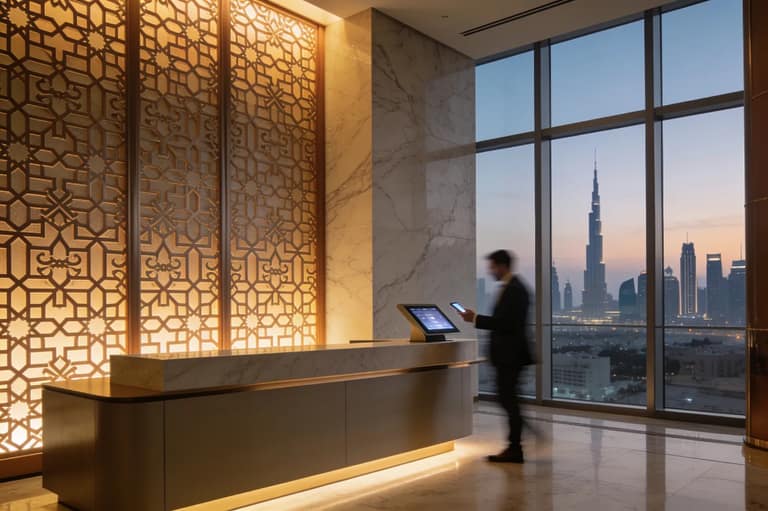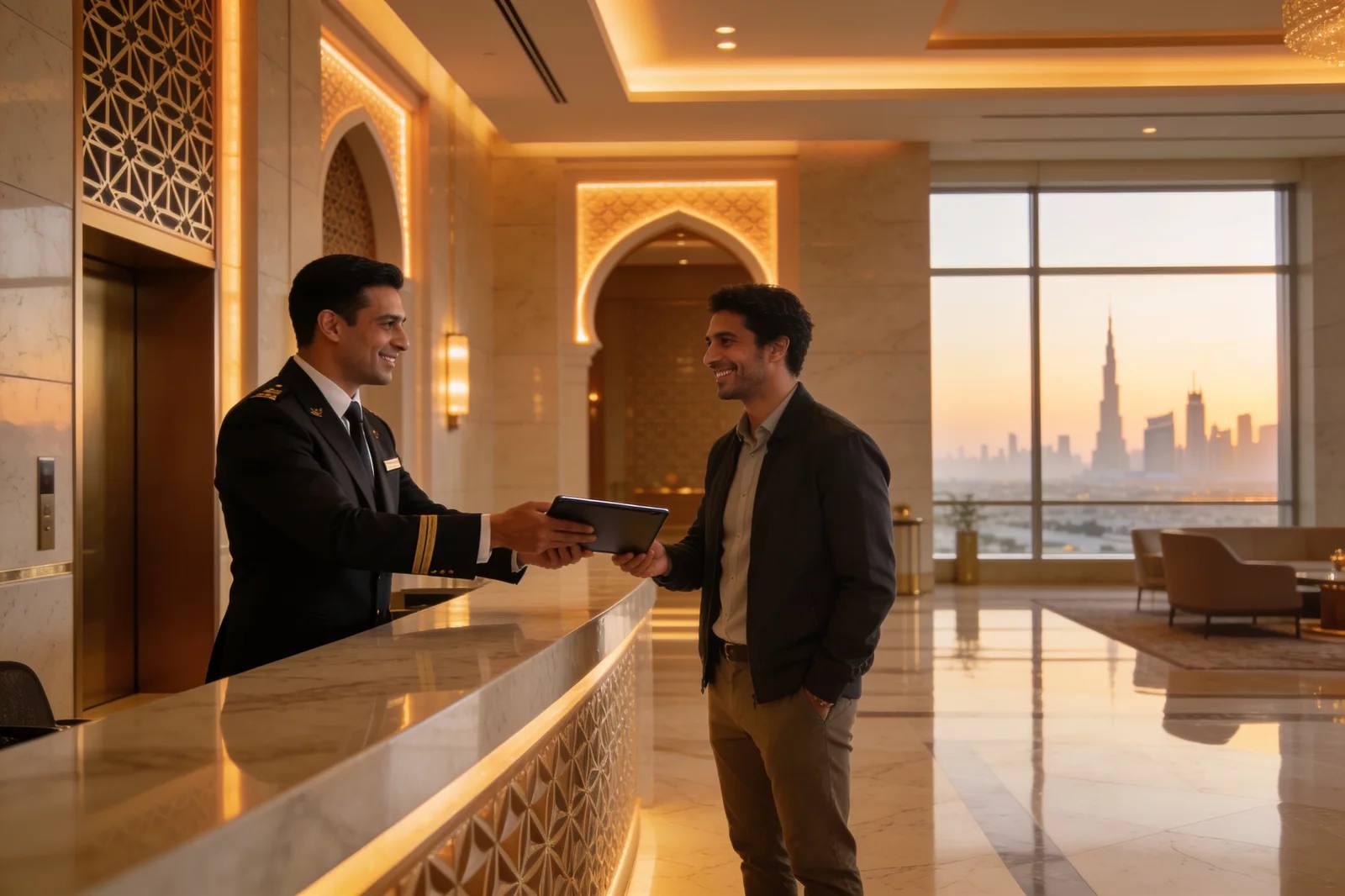
Integrating concierge tools in Dubai luxury hotels requires selecting mobile-first platforms that connect to your PMS and local service APIs, training staff through phased rollouts, and measuring ROI via response-time and upsell metrics. The objective is preserving high-touch service while automating routine requests. Knight Frank forecasts that a significant portion of new Dubai hotel rooms by 2030 will be five-star properties, intensifying competition for guest loyalty through technology.
Why traditional concierge models fall short
Dubai's premium tourism sector expects digital infrastructure woven into high-touch service delivery.
Concierge service companies are identified as participants in Dubai's expanding luxury maritime and hospitality market, alongside premium transport and event management providers. Hotels relying solely on phone-based or in-person desks create friction that competitors eliminate through integrated apps.
The pressure is structural. Luxury hotels in Dubai integrate with marina infrastructure to allow travelers to combine hotel stays with superyacht experiences in a single itinerary. A standalone concierge cannot coordinate these multi-vendor bookings efficiently without digital tooling.
In the UAE, hotel managers integrate digital infrastructure into high-touch service delivery for premium tourism.
Selecting the right concierge technology stack
Your selection criteria should prioritize four capabilities: mobile-first guest interfaces, AI-powered request routing, native Dubai service integrations, and scalability across property portfolios.
Mobile-first design and AI capabilities
Guests should complete requests without downloading proprietary apps. Progressive web apps or integrated messaging platforms (WhatsApp Business API, in particular) reduce adoption friction. AI functions should handle intent recognition for common requests, route complex ones to human staff, and learn from resolution patterns. Effective integration ensures these technologies enhance rather than hinder the guest experience.
Dubai-specific integrations to demand
Generic global platforms often lack local connectivity.
- RTA Dubai APIs for real-time transport booking, including limousine services and water taxis
- Restaurant reservation systems covering Michelin-listed and emerging fine-dining venues
- Yacht charter and marina experience platforms, given Dubai's integration of hotel stays with marine experiences
- Desert safari and cultural tour operator networks
Premium transport, yacht experiences, restaurant reservations, desert excursions, and cultural tours are relevant categories for Dubai luxury-concierge integration. Validate priorities against your own enquiry logs to determine which generate the highest demand for your specific property type.
Specialized hospitality solutions versus generic platforms
| Feature | Hospitality-specialized platform | Generic business messaging tool |
|---|---|---|
| PMS/CRM native connectors | Pre-built, certified | Requires custom development |
| Dubai service API library | Curated local partnerships | Self-managed integrations |
| Guest journey mapping | Pre-arrival to post-departure | Ad-hoc conversation threads |
| Staff workflow tools | Task assignment, escalation rules | Manual routing |
| Hospitality KPI dashboards | NPS, RevPAR impact, upsell tracking | Generic sentiment analysis |
Specialized platforms cost more upfront but reduce integration risk and accelerate time-to-value. Generic tools suit properties with dedicated development resources, which few hotel operations teams maintain.
Integrating concierge tools in Dubai luxury hotels
Concierge tools generate value only when they read and write guest data to your core systems. Integration architecture varies by PMS, but principles remain consistent across Dubai's luxury hotel market.
API integration steps for major PMS providers
- Audit your current PMS API documentationRequest the latest REST or GraphQL API specifications from your PMS vendor. Verify which guest profile fields, reservation statuses, and folio data endpoints are exposed.
- Map data flows for unified guest profilesDefine which concierge interactions sync bidirectionally. At minimum: guest preferences (dietary, pillow type, temperature), service requests with timestamps, and upsell conversion events should write back to the PMS guest history. Reservation changes from the concierge (late checkout, room upgrades) must update the PMS in real time to prevent front-desk conflicts.
- Configure middleware or direct integrationUse your PMS vendor's certified integration marketplace where available. For custom connections, deploy an enterprise service bus or iPaaS layer that handles authentication token rotation, rate limiting, and fallback queues. Never allow the concierge platform direct database access.
- Test with sandbox data before go-liveRun parallel operations for two weeks: staff enter identical requests in both old and new systems, comparing PMS records for accuracy. Test edge cases including group bookings, split folios, and same-day reservation modifications common during Dubai's peak conference and holiday seasons.
- Establish monitoring and error escalationSet API health dashboards with alerts for failed syncs exceeding five minutes. Define manual fallback procedures that front-desk staff can execute without engineering support.
CRM connectivity for personalization
If a guest's history shows previous yacht charter bookings, the concierge should surface marine experience offers automatically before check-in. CRM integration also powers post-stay follow-up that converts one-time visitors into repeat guests at your property or sister properties.
UAE data privacy compliance
- Explicit consent for data processing, with granular opt-outs for marketing use
- Data localization considerations: verify whether your concierge vendor stores guest data outside UAE jurisdiction
- Processor agreements that define liability for breaches occurring in the concierge platform
- Guest right to access, correct, and delete personal data held by integrated systems
The application of Dubai Data Law provisions to private hotel third-party apps remains partially unresolved. Consult UAE legal counsel before finalizing vendor contracts, particularly for cloud-hosted solutions with multi-tenant architectures.
Training staff and managing technology adoption
Technology fails when staff circumvent it. Front-of-house teams in Dubai luxury hotels often have deep personal networks with restauranteurs and experience providers; they may view digital platforms as threats to their relationships and tips.
Phased training framework
| Week | Front-of-house focus | Back-of-house focus |
|---|---|---|
| 1 | Shadow mode: observe AI routing, no guest-facing use | Dashboard familiarization, test request creation |
| 2 | Handle partial request volume through platform, retain legacy workflows | Escalation workflow practice, vendor API status checks |
| 3 | Full platform use with supervisor review of exceptions | Automated reporting, inventory threshold management |
| 4 | Independent operation, peer mentoring assigned | Process documentation update, feedback to vendor |
Train concierges to treat the platform as a relationship amplifier, not a replacement. When the system confirms a restaurant reservation instantly, the concierge gains time to negotiate preferred seating or greet the maître d' personally. Position technology as elevating their role toward curation and surprise, not eliminating it.
Overcoming resistance
Address specific fears directly. Staff worried about commission transparency should see real-time tracking of attributed upsell revenue. Those concerned about guest rapport should practice scenarios where the platform provides data ("I see you enjoyed the desert photography tour last visit; a new private dawn session is available") that enables deeper personalization than memory alone allows.
Properties exploring AI integration in hotel services can adapt those frameworks for concierge-specific deployments. Similarly, cultural influence strategies for Dubai boutique hotels help staff translate platform data into locally resonant recommendations.
Personalizing guest experiences through integrated data
Connected concierge tools enable hyper-personalization at scale. The integration of guest history, real-time context, and local inventory creates offers that feel individually crafted.
Dubai-specific personalization opportunities
- Pre-arrival: Guests with previous fine-dining bookings receive curated Michelin Key restaurant availability for their stay dates
- During stay: Real-time weather data prompts indoor alternatives when sandstorm warnings appear, or sunset yacht timing adjustments
- Post-experience: Automated feedback collection after desert safaris, with negative responses routed to guest recovery promptly
Properties seeking to deepen loyalty program engagement for Dubai luxury guests can use concierge interaction data to tier benefits more precisely than nights-stayed metrics alone.
Avoiding the uncanny valley
Personalization fails when guests feel surveilled. Disclose data use in booking confirmations, not at the moment of recommendation. Allow one-tap opt-out of AI-suggested experiences. Ensure human concierges review automated proposals before guest contact when preferences suggest high sensitivity (romantic occasions, medical requirements, security concerns).
Tailoring digital concierge services for Dubai's luxury market
Generic global platforms fail in Dubai because they miss cultural, regulatory, and logistical specifics that guests expect a luxury property to handle instinctively. Customization falls into four areas.
Language and cultural interface design
Arabic language support requires right-to-left interface design, culturally appropriate iconography, and formal address protocols. Translation alone is insufficient. Prayer time notifications should integrate automatically with guest-facing displays and mobile apps, adjusting suggested activity times accordingly. During Ramadan, scheduling logic must account for Iftar and Suhoor timings, with dining reservations and spa treatments restructured around fasting hours. This approach aligns with principles seen in Design of Culture: Integrating Local Identity into Luxury Hotel Spaces.
Halal compliance and dietary filtering
Concierge recommendation engines need Halal compliance as a native filter, not an afterthought. This affects restaurant suggestions, in-room dining defaults, and packaged experiences. A guest searching for "steakhouse" should receive results pre-filtered for Halal-certified venues unless they explicitly override the setting.
VIP transport and regional mobility
Dubai's luxury guest expects seamless movement. Concierge platforms integrate with ride-hailing services for chauffeured options, real-time transit information for public transport, and private aviation handlers for helicopter or seaplane transfers. The system should track flight arrivals at Dubai International or Al Maktoum International and auto-adjust pickup timing.
Local tourism ecosystem connectivity
Desert safari booking APIs connect directly to regional operators. Yacht charter, Burj Khalifa timed entry, and Atlantis Aquaventure reservations should flow through the same interface.
Properties that get this right signal cultural fluency. Those that do not, even with premium hardware, read as imported and indifferent. For guests choosing where to stay, this distinction influences booking decisions. See hotels in Dubai that are investing in these localized digital layers. This is particularly relevant for Embracing Local Character: How Cultural Influences Shape Dubai's Boutique Hotels.
Measuring ROI and operational performance
Concierge technology investments require concrete measurement frameworks. Without defined KPIs, properties cannot distinguish platform value from seasonal demand fluctuations or concurrent service improvements.
Core KPIs for Dubai luxury hotel concierge platforms
Benchmark metrics from industry practice
- Net Promoter Score (NPS) and Customer Satisfaction (CSAT) for concierge-specific interactions, isolated from overall stay ratings
- Concierge staff hours reallocated from transactional to consultative tasks
- Guest complaint volume related to booking errors or communication delays
- Repeat booking rate among guests who used digital concierge services versus those who did not
No independent study isolates concierge tools' causal effect on Dubai luxury hotel satisfaction. Research links smart technology to higher ratings. Properties should establish their own baselines before implementation to measure change.
Calculating return on investment
ROI calculation requires comparing total cost of ownership against attributable revenue and cost savings.
- Annual platform licensing, integration, and maintenance costs
- Staff training time and temporary productivity reduction during rollout
- Incremental revenue from upsold experiences, F&B, and room upgrades attributed to concierge prompts
- Labor cost changes: reduced overtime from automated handling of routine requests, or reallocation rather than reduction
- Guest lifetime value impact: repeat visit rate and average spend changes for engaged versus non-engaged guest segments
No verified average implementation cost exists for mid-to-large Dubai luxury hotels. Vendor estimates vary widely by property size, integration complexity, and customization requirements. Request itemized proposals from at least three hospitality-specialized providers, and benchmark against properties of comparable scale.
Future-proofing your concierge service model
Current integration decisions determine how readily your property adopts emerging technologies. Build architecture that accommodates expansion without replacement.
Voice assistants and conversational AI
Arabic-language voice interfaces are maturing for hospitality use. Properties with strong API infrastructure can add voice channels to existing concierge backends rather than deploying parallel systems. Ensure your current platform supports intent models in Modern Standard Arabic and Gulf dialects, not just English.
Predictive analytics
Machine learning models that anticipate guest needs require historical data volume that accumulates only after sustained platform use. Early platform adoption is thus a competitive positioning decision, as it builds the dataset necessary for predictive recommendation engines over time.
Preparing for regulatory evolution
UAE data protection rules will likely tighten as digital service adoption grows. Design your integration with audit trails, consent management, and data portability from inception. Retrofitting compliance into legacy connections costs multiples more than building it correctly initially.
Implementation checklist for hotel operators
- Audit current PMS API capabilities and map required guest data flows
- Shortlist vendors with verified Dubai service integrations, not just global coverage
- Confirm UAE PDPL and DIFC compliance pathways with legal counsel before contract signature
- Establish pre-implementation baselines for response time, upsell rate, and satisfaction scores
- Design four-week phased staff training with shadow, parallel, supervised, and independent phases
- Build monitoring dashboards for API health, guest feedback, and revenue attribution
- Plan voice and predictive analytics expansion as second-year enhancements, not first-year requirements
Properties ready to evaluate specific technology partners can see hotels in Dubai that have deployed integrated concierge systems to benchmark guest experience outcomes. For operators seeking direct booking strategies for Dubai properties, concierge data on guest preferences can inform targeted marketing that reduces OTA dependency.
Begin your integration assessment with a vendor-agnostic audit of current guest request volumes, resolution paths, and data silos. The technology selection follows naturally from operational reality, not vendor promises. You can also see hotels in Dubai to compare service levels across different brands.