Loyalty programs for luxury hotels in Dubai have shifted from simple point accumulation to experiential ecosystems that drive direct bookings. These programs prioritize invisible recognition and culturally resonant rewards over transactional discounts. By integrating CRM systems with booking engines, independent properties can increase customer lifetime value while reducing reliance on online travel agencies.
What Experiential Loyalty Means for Dubai's Luxury Market
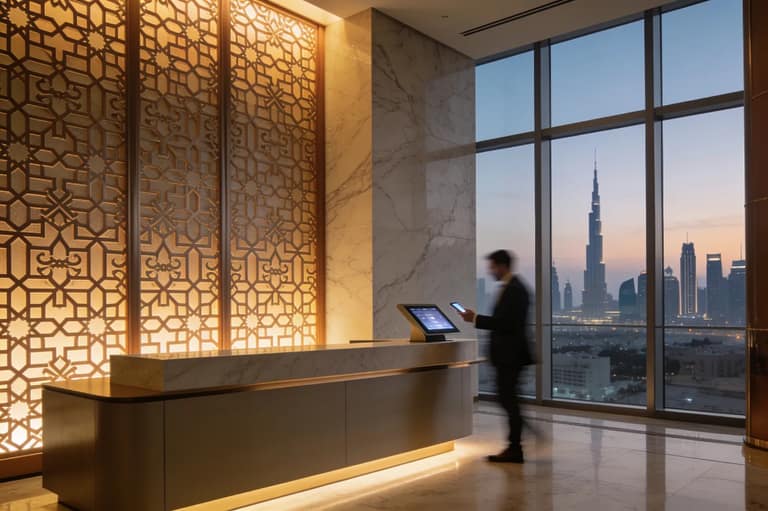
Experiential loyalty rewards guests with exclusive access and personalized moments rather than standard points or room upgrades. A private dinner overlooking the Burj Khalifa, a bespoke oud blending session, or immediate recognition of a guest’s linen preference defines this approach. Transactional models trade nights for stays; experiential models trade data for deepened relationships.
McKinsey & Company identifies personalized experiences as the top unmet need among high-net-worth travelers in Dubai. Deloitte corroborates these findings, listing seamless digital integration and exclusive local experiences as the second and third priorities. This market gap offers a clear opportunity for properties redesigning their loyalty structures.
Global groups such as Aman Resorts and Rosewood Hotels adapted their Middle Eastern strategies in late 2025 to emphasize cultural relevance and technology-enhanced personalization. Independent Dubai properties can match or exceed these standards due to greater operational agility.
Why Standard Points Systems Fail UHNW Guests
Traditional tiered programs rely on frequency and spend thresholds that wealthy travelers often find patronizing. The system values transaction volume over relationship depth. Psychological research indicates that ultra-high-net-worth guests prioritize exclusivity, status signaling, and time scarcity. A program that saves a guest fifteen minutes at check-in often outperforms one offering a future free night.
Designing Rewards for Dubai's Cultural Context
Effective rewards reflect local culture, leverage exclusive partnerships, and deliver moments guests cannot replicate independently. Three concrete examples illustrate this strategy:
- Private desert experiences with Bedouin heritage elements. Returning guests receive curated evenings at protected conservation reserves featuring falconry demonstrations, traditional cooking instruction, and astronomy narration. This connects to Emirati identity while providing restricted-access exclusivity.
- After-hours viewing at contemporary art galleries in Alserkal Avenue. Partnerships allow members private access to exhibitions, often with the artist or curator present. This appeals to culturally engaged international visitors and the growing collector base.
- Bespoke spa rituals using regionally sourced ingredients. Programs offer personalized treatments developed after consultations with practitioners, using frankincense from Oman or camel milk from UAE farms. The reward is customization, not discount.
Additional opportunities include priority reservations at restaurants with long waiting lists, access to private yacht charters, and invitation-only events during Dubai Art Season. The common thread is access that money alone cannot guarantee.
Properties seeking partnership inspiration can see hotels in Dubai that have developed distinctive local programming.
Integrating Loyalty with Direct Booking Channels
Linking loyalty benefits to direct bookings requires technical integration between CRM systems, property management systems, and booking engines. When executed properly, this creates a virtuous cycle: guests book direct to access benefits, properties capture data to personalize future stays, and personalization deepens loyalty further.
Platforms serving the boutique and independent luxury segment include BookingWhizz, HMS Flow, Fideltour, GuestMaker, and MyHotelLine. These systems offer loyalty-powered CRM functionality with booking engine integration, enabling guest profiling that persists across touchpoints.
Real-time recognition at check-in depends on this connectivity. When a guest books directly, the CRM flags preferences to front desk staff before arrival, such as dietary restrictions, pillow types, previous complaints, or anniversary dates. The guest experiences recognition as intuitive service rather than a database query.
Strategically, loyalty benefits should be positioned as the primary reason to book direct. Display member rates or exclusive perks prominently on the property's own booking engine while maintaining rate parity with OTAs on base inventory. Offering flexible cancellation terms or upgrade priority unavailable through third-party channels further incentivizes direct engagement.
For properties refining their infrastructure, elevating hotel website user experience provides guidance on conversion optimization. Those seeking specialized support can see the services available for direct booking strategy development.
This statistic, also reported by Arabian Business, demonstrates that loyalty programs already drive significant direct booking volume. The opportunity lies in expanding this share by making membership more compelling than OTA convenience.
Implementation Roadmap: From Audit to Pilot Launch
Launching an experiential loyalty program follows a six-phase process. Each phase builds on the previous, with validation points that prevent costly misalignment.
- Audit existing guest data and identify segmentsReview PMS and CRM records to identify repeat guests, their booking patterns, spend levels, and stated preferences. Segment by behavior (annual visitors, seasonal residents, event-driven travelers) rather than demographics alone. Flag data gaps that limit personalization.
- Map unmet needs against cultural and competitive contextSurvey or interview a sample of repeat guests about what they value that current programs do not provide. Research competitor offerings, including global chains with Dubai properties. Identify white space where your property can deliver distinctive value.
- Design reward architecture and partnership frameworkDefine three to five experiential reward categories aligned with guest priorities and property capabilities. Negotiate partnership agreements with local experience providers. Establish cost per redemption and annual capacity limits for each reward type.
- Select and configure technology stackEvaluate CRM and booking engine platforms for integration depth, data portability, and staff usability. Configure automated preference flags, booking engine loyalty messaging, and post-stay communication triggers. Ensure GDPR and UAE data privacy compliance in all data handling workflows.
- Train staff for invisible service deliveryFrontline staff must deliver personalized recognition without referencing systems explicitly. Training should cover preference interpretation, cultural sensitivity for Dubai's diverse guest origins, and escalation protocols for exceptional requests.
- Pilot with invited members, then iterateLaunch with a closed group of known repeat guests. Monitor redemption patterns, satisfaction scores, and direct booking conversion. Adjust reward mix, partnership terms, and recognition protocols based on pilot data before broader rollout.
Navigating Data Privacy Requirements
Personalization depends on data collection, which carries regulatory obligations in both the UAE and for European guests. The UAE's Personal Data Protection Law (PDPL), fully effective from 2023 with enforcement strengthening through 2025-2026, requires explicit consent for data processing, clear purpose limitation, and guest rights to access and deletion.
GDPR applies to any property handling EU resident data, which includes many Dubai luxury guests. Compliance requires lawful basis documentation, data minimization, and cross-border transfer safeguards. Properties should conduct privacy impact assessments before implementing AI-driven personalization that profiles guest behavior.
Practical compliance steps include obtaining granular consent at booking for specific data uses, maintaining separate consent records for marketing, personalization, and partner sharing, enabling guest self-service preference management, and establishing data retention schedules. These measures protect the property legally while building guest trust through transparency.
The Economic Case for Retention Over Acquisition
Established hospitality economics support prioritizing retention when specific regional CAC and CLV ratios are unavailable. Acquiring a new luxury guest typically costs five to seven times more than retaining an existing one across service industries. In Dubai's competitive market, rising digital advertising costs for luxury keywords intensify this multiplier.
Repeat guests exhibit higher spend per stay, lower price sensitivity, and greater tolerance for rate increases. They provide referral value within closed social networks that are difficult to reach through conventional marketing. For independent properties with limited acquisition budgets, loyalty-driven retention offers the most efficient path to revenue growth.
The 30% direct booking attribution from loyalty members represents existing performance. Properties that deepen program experiential value can reasonably target higher direct booking shares from this segment, based on patterns from advanced implementations in comparable markets.
Technology Capabilities for 2026 and Beyond
AI-driven personalization has become a standard capability rather than emerging technology. Modern hospitality CRMs use machine learning to predict guest preferences from behavioral signals, including browsing patterns on the booking engine, dining reservations, spa timing, and weather-responsive activity suggestions. Mobile-first delivery ensures recognition extends beyond the property to pre-arrival and post-departure touchpoints.
The key implementation principle is invisible integration. Technology should anticipate needs without intruding on the guest experience. A notification that a preferred room type became available reads as attentive. A push message triggered by lobby geofencing reads as surveillance. Properties must design automation with human judgment as the final filter.
For properties exploring AI-enhanced service delivery, mastering luxury travel experiences with AI and human personalization offers extended analysis of balancing technology with authentic hospitality.
Your Next Steps
Begin with a frank assessment of your current guest data quality and repeat guest percentage. If fewer than 20% of annual room nights come from returning guests, prioritize data collection and basic recognition before building elaborate reward structures. If repeat guests already represent significant volume, audit their satisfaction and unmet needs to identify experiential opportunities.
Schedule partnership conversations with two to three local experience providers within thirty days. Their willingness to collaborate on exclusive access often surprises properties that have not asked. Simultaneously, request demonstrations from CRM platforms that integrate with your existing booking engine.
Finally, benchmark your competitive set by reviewing how comparable properties present loyalty benefits. You can see hotels in Dubai across segments to understand current market positioning. The properties that move decisively toward experiential loyalty in 2026 will establish guest relationships that competitors cannot easily replicate.