Luxury shoppers convert when planning feels like concierge collaboration, not sales processing. The right planning techniques turn an inquiry into a booked stay by treating time as the guest's most valuable asset and using predictive data to surface options before the guest asks. This guide covers operational methods boutique hoteliers and travel consultants need to increase direct booking conversion through hyper-personalized workflows.
Why personalization outperforms premium packaging in luxury hospitality
High-net-worth travelers do not respond to upgraded thread counts or generic "luxury" labels. They respond to evidence that someone understood their specific preferences and saved them decision-making effort. For affluent guests, personalization signals competence; standard premium packaging signals commodity positioning.
The luxury shopper operates on a distinct time-versus-money calculus. A guest with high hourly earning potential loses money researching options that a skilled planner could narrow in minutes. Your planning technique must communicate that you respect this arithmetic.
Generic premium offers fail because they shift work to the guest. A PDF brochure with ten room categories forces comparison shopping. A tailored proposal with two curated options, each matched to stated or inferred preferences, demonstrates executive function on the guest's behalf. The conversion difference lies in who performs the cognitive labor.
True personalization requires distinguishing between stated preferences, revealed preferences from past behavior, and inferred preferences from similar guest profiles. A guest who booked ocean-view suites twice has revealed a preference. A guest whose social engagement centers on culinary content may infer interest in chef's table access, pending verification. Effective planning techniques weight these signals differently and disclose inferences transparently.
Leveraging data and AI for predictive guest preferences
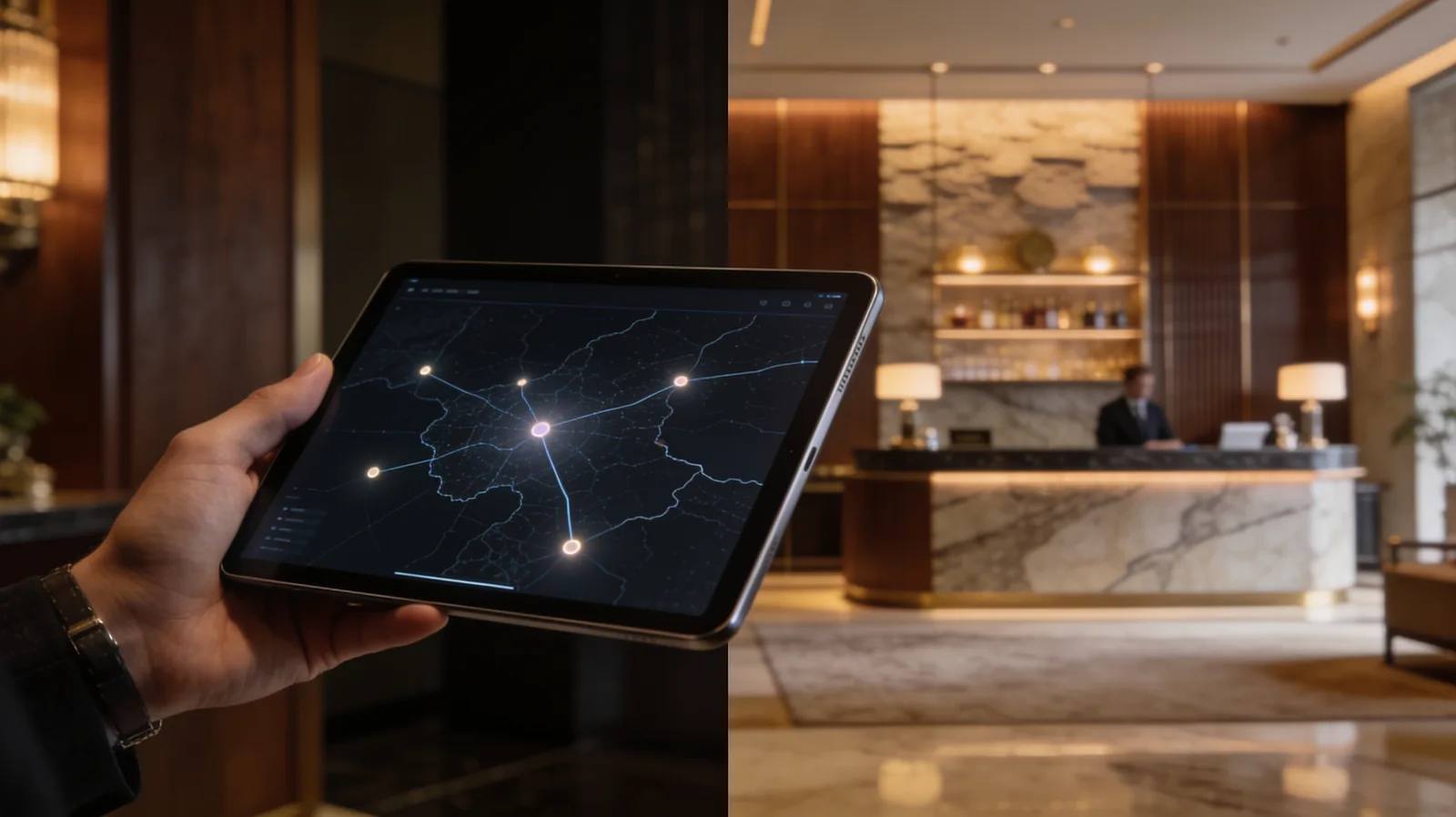
AI tools now enable preference prediction before the first conversation, but implementation requires discipline to preserve the human relationship. The goal is informed preparation, not automated interaction.
Recent technological advances have enabled hyperpersonalization, moving hospitality beyond static customer databases toward dynamic guest profiles.
- Content and sentiment analysis of past feedback. The FCASR system builds user profiles by combining content analysis with sentiment evaluation of feedback to capture individual preferences for better recommendations. A guest who mentioned "noisy HVAC" in a previous review receives priority placement in quieter wing rooms without requesting it.
- Customer-journey touchpoint prediction.
- Social signal integration. Public culinary posts, golf course check-ins, or wellness content engagement provide inference inputs when guests opt into data sharing. These signals require explicit consent under 2026 privacy frameworks and should never substitute for direct conversation.
The critical operational rule: AI prepares the planner, it does not replace the planner. A profile suggesting strong spa preference still requires human confirmation. The opening message references the inference conversationally: "Based on your previous stays, I wondered if you'd prefer mornings free for wellness activities." This transparency builds trust; concealment destroys it.
Software categories for this workflow include integrated CRM-PMS platforms, guest intelligence engines that aggregate online activity with booking data, and communication tools that surface profile insights during live conversations. Evaluate tools against your property's data infrastructure and staff technical capacity.
Structuring the first reply to convert luxury inquiries
Speed matters, but relevance matters more. The first response to a luxury inquiry must arrive within hours, not days, and must contain substantive personalization rather than acknowledgment templates.
- Confirm understanding in one sentence.Reference the guest's stated dates, occasion, or party composition exactly as they provided it. This proves human attention.
- Present two options, never one and never more than three.One option forces a yes/no decision; more than three reintroduces the comparison burden you are paid to eliminate. Option A matches stated preferences precisely. Option B offers a meaningful upgrade or alternative that addresses an inferred preference, with transparent reasoning.
- Include one specific, non-obvious detail.Mention that the requested dates coincide with a local culinary festival, or that the preferred room category has a newly renovated bathroom. This demonstrates insider knowledge unavailable through OTA listings.
- Request a specific, low-effort response."Shall I hold Option A while you confirm travel dates?" or "Would a brief call Tuesday afternoon help clarify the spa scheduling?" Avoid open-ended "let me know if you have questions."
Example application: A guest inquires about a four-night anniversary stay. The reply confirms the dates, presents the requested garden suite plus a courtyard suite with private dining terrace (noting their previous restaurant engagement posts), mentions the chef's tasting menu available that week, and asks to hold the garden suite while they decide on the terrace upgrade.
Tone calibration is essential. Luxury hospitality communication avoids exclamation marks, urgency language, and excessive deference. Confident expertise converts better than subservience. The planner speaks as a specialist advising a client, not a supplicant requesting business.
Strategic upselling and cross-selling as concierge guidance
Upselling in luxury planning fails when it reads as revenue extraction. It succeeds when framed as experience optimization based on the planner's expertise. The technique is identical; the positioning differs entirely.
Effective upselling scripts follow a consistent structure: observation, inference, recommendation, and transparent rationale. The language mirrors advisory conversation, not transactional suggestion.
| Offer | Sales positioning (avoid) | Concierge positioning (use) |
|---|---|---|
| Suite upgrade | "Upgrade to our premier suite for a modest additional cost." | "Given your preference for morning light and separate workspace, the corner suite's eastern exposure and study would suit your pattern better than the standard layout." |
| Private dining | "Add our exclusive chef's table experience for a premium per person." | "The chef sources that morning for dinner service. If you're interested in the local catch he mentioned on Instagram, Tuesday's menu features it exclusively at the kitchen table." |
| Spa package | "Enhance your stay with our signature spa package." | "You mentioned arriving after a long flight. The jet-lag recovery treatment uses the same acupressure approach you noted helped in your Singapore review. I can schedule it for your arrival afternoon before the stiffness sets in." |
The pattern is consistent: reference specific guest information, connect the offer to a documented preference or likely need, and present the recommendation as expertise application rather than product promotion. The guest should feel seen, not sold.
Timing integration matters. Upsells introduced during initial planning feel like itinerary construction. Upsells introduced post-booking feel like add-on marketing. The highest-margin items (suites, exclusive experiences, extended stays) belong in the initial proposal where they shape the trip architecture. Ancillary items (transfers, welcome amenities) fit pre-arrival communication.
Personalized recommendations at the planning stage capture guest attention when trip imagination is active, before budget allocation mental accounting solidifies.
Communication cadence and follow-up tactics for undecided guests
Luxury follow-up requires patience without passivity. The goal is maintaining presence without pressure. It demonstrates availability without desperation.
- Day 1: Initial reply with curated options.
- Day 4: Brief check-in with new relevant information ("The restaurant released Tuesday reservations this morning; shall I include you?").
- Day 10: Soft availability update ("Two of the three rooms we discussed have held interest; I wanted to confirm your timing before releasing holds").
- Day 18: Final structured outreach with simplified binary choice and explicit timeline.
Each touchpoint must contain new information. Repetition of the same offer signals that the planner has nothing additional to contribute. The Day 4 message might reference a newly available experience; the Day 10 message introduces genuine scarcity without artificial construction.
Objection handling in luxury contexts differs from standard sales. Price objections are rare; fit objections are common. The guest may hesitate about whether the property understands their specific needs, whether the experience justifies the logistics, or whether the planner will continue attentive service post-booking.
Address fit objections with specificity, not reassurance. "We understand luxury" is meaningless. "The housekeeper who prepares the west wing has handled three previous stays for guests with your dust sensitivity; I confirmed she'll manage your room personally" is persuasive evidence.
Channel selection should follow guest preference rather than property convenience. There is no single best channel for high-net-worth guests across all markets. Some guests prefer WhatsApp for its immediacy; others maintain email as their professional boundary. The first reply should ask, or infer from the inbound channel, and adapt accordingly. Mastering the balance between AI efficiency and human personalization means letting the guest define the interaction mode.
Measuring the ROI of personalized planning techniques
Personalization investments require attributable metrics. Without measurement, planning techniques become untestable folklore rather than optimized operations.
- Inquiry-to-booking conversion rate. Track by planner, by guest segment, and by personalization intensity (curated options versus standard brochure). This isolates technique effect from traffic quality variations.
- Average daily rate lift from personalization. Compare booked ADR for guests who received tailored planning versus those who self-served through standard booking engines. Account for seasonality and lead time.
- Ancillary revenue per booked guest. Measure pre-arrival upsell attachment rate and average upsell value for planned itineraries versus standard bookings.
- Repeat booking velocity. Track time to second booking and second-booking ADR for guests whose first stay involved personalized planning. Relationship initiation quality predicts lifetime value.
- Planner efficiency ratio. Bookings per planning hour invested, by complexity tier. This prevents personalization from becoming unsustainably labor-intensive.
Attribution methodology matters. Simple before-and-after comparisons confuse technique effects with market conditions, seasonal demand, or concurrent marketing changes.
- Controlled comparison periods with similar demand conditions.
- Segmented analysis by guest source (direct, referral, OTA-originated but converted direct).
- Longitudinal tracking of cohorts exposed to different planning intensities.
Industry benchmarks for conversion gains from personalized travel-planning techniques across luxury boutique properties remain limited. Establish internal baselines rather than chasing industry averages that may not reflect your guest mix or competitive position.
Technology supports measurement through CRM-pipeline tracking, booking-engine integration, and post-stay feedback correlation. The same AI-enhanced customer experience modeling that informs personalization can evaluate which predictive signals actually correlate with booking outcomes, refining future targeting.
For properties developing themed offerings, themed luxury travel collections provide structured personalization frameworks that simplify both execution and measurement. Pre-defined experience architectures reduce planning variability while maintaining guest-perceived customization.
Operational priorities for implementation
- Build unified guest profiles combining PMS history, CRM interactions, and opted-in social signals before the first planning conversation.
- Structure every first reply with two curated options, one specific insider detail, and a single low-friction next step.
- Frame all upsells as expertise-based recommendations with transparent connection to documented guest preferences.
- Establish internal conversion baselines by segment and measure planner efficiency to prevent personalization from scaling unsustainably.
- Maintain human oversight of all AI-generated inferences; transparency about prediction sources builds trust that covert data use destroys.
Properties in competitive leisure markets can reference personalized trip planning approaches in high-demand destinations for market-specific techniques. The fundamental framework applies across locations, but local knowledge integration separates competent planners from exceptional ones.
Cultural travel integration offers differentiation when multiple properties compete for the same luxury segment. Guests who have experienced genuine local immersion become resistant to generic luxury packaging; planning techniques that surface authentic cultural access create defensible preference. See how cultural travel experiences shape luxury hotel design.
Convert more luxury inquiries into confirmed stays
Your property already delivers exceptional experiences. The gap is in the planning conversation that precedes them. Refine your team's personalized travel planning techniques and measure the conversion lift within one booking cycle.