Transactional storytelling places narrative elements at specific decision points in the booking journey to reduce friction and motivate immediate reservations. Unlike brand storytelling, which builds long-term awareness, transactional storytelling targets users who already know they want to stay in Dubai and need the final push to book direct rather than through an OTA.
Why standard brand storytelling fails to drive direct bookings
Brand storytelling excels at making a hotel memorable. It creates emotional associations with luxury, heritage, or design. The problem is that emotional memory does not automatically convert to transactional behavior. A traveler inspired by a hotel's origin story on Instagram can still default to Booking.com when ready to reserve, because the inspiration content provided no direct path.
This gap between engagement and conversion is particularly costly in Dubai's competitive hotel market. The city attracts business travelers, luxury leisure guests, and families with distinct needs and booking timelines. A single narrative arc cannot serve all three, and awareness content rarely addresses the specific objections that arise during checkout.
Research on visual elements in hotel photos confirms that lighting, color scheme, human presence, and camera angle influence online booking decisions. Yet these visuals alone do not close the sale. They attract attention without necessarily providing the functional reassurance needed at the point of transaction.
The distinction matters. Brand storytelling asks, "Do you remember us?" Transactional storytelling asks, "Why should you book right now, on this site, for this room?"
Defining transactional storytelling for hotel marketing
Transactional storytelling has three defining characteristics. First, it is placement-specific: the narrative appears where a decision is being made, not where awareness is being built. Second, it is outcome-oriented: every story element connects to a concrete guest benefit rather than an abstract brand value. Third, it is friction-reducing: it anticipates and answers objections that block completion.
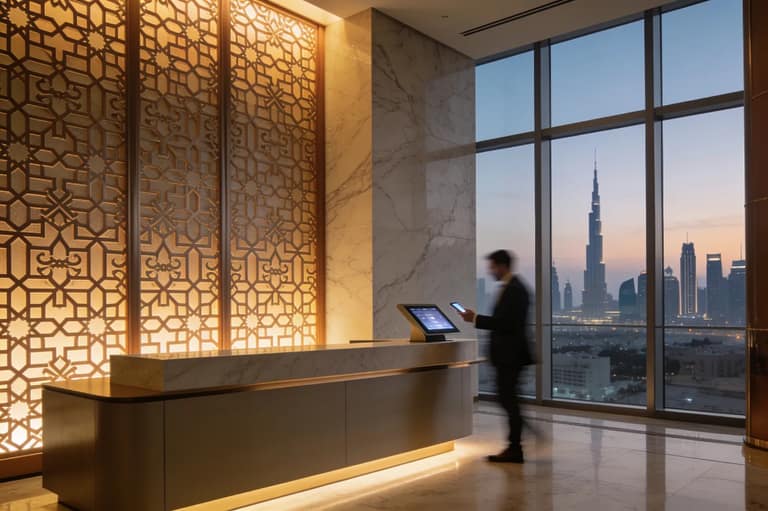
Where brand storytelling might describe a hotel's architectural philosophy, transactional storytelling explains how that architecture solves a problem for the guest. Floor-to-ceiling windows become "wake up to the Burj Khalifa without leaving your bed." Heritage design becomes "check in faster with mobile key access through our historic courtyard entrance."
This approach aligns with findings that booking intentions are mainly determined by visual presentations and perceived usefulness. Transactional storytelling makes usefulness explicit and immediate.
Crafting micro-stories that motivate immediate action
Micro-stories are narrative units of 25-75 words that fit within existing page structures without requiring dedicated content sections. They follow a Problem-Agitation-Solution structure adapted to the booking context.
Problem: identify the specific friction
Start with the obstacle the guest faces. For business travelers, this might be unpredictable meeting schedules. For families, it is managing children's energy across time zones. For couples, it is finding privacy in a bustling destination.
Agitation: make the cost of inaction felt
Briefly amplify the consequence of not solving the problem. Not in a manipulative way, but with specificity that resonates with the persona's actual experience.
Solution: connect the hotel feature to the resolved outcome
The solution must be concrete and bookable. Not "our spa relaxes you" but "book the 45-minute express massage between meetings, with return transport to DIFC included."
Example: rewriting a standard room description
Standard: "Our Deluxe King room features 45 square meters, city views, premium bedding, and a marble bathroom."
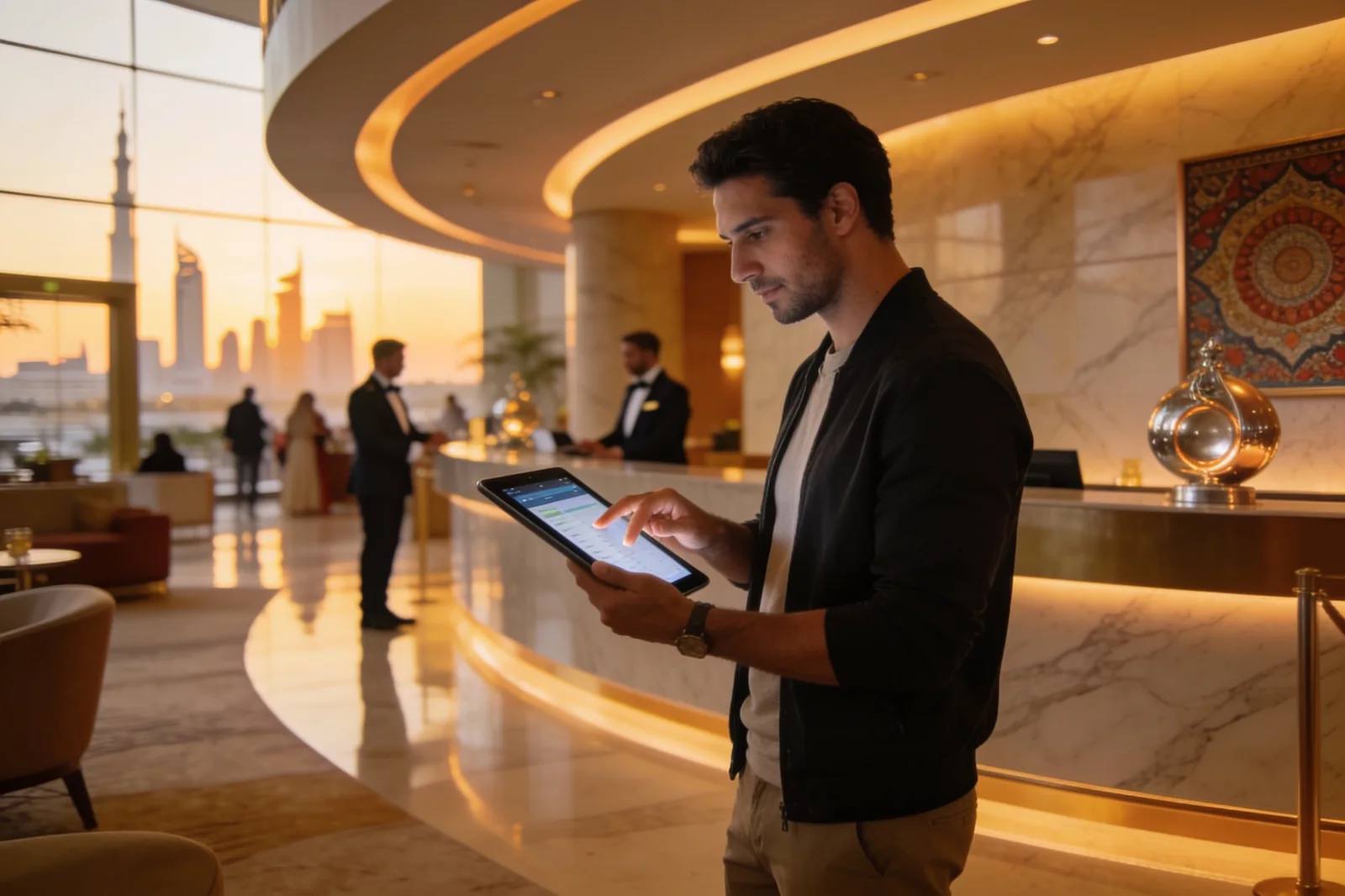
Transactional micro-story: "Your flight lands at 23:00. By 23:45, you are in a king bed with blackout curtains, the city glittering below but silent behind triple glazing. The marble shower is hot in six seconds. Tomorrow's meeting in DIFC is 12 minutes by hotel car, booked through the bedside tablet. This is the room that respects your jet lag."
The rewrite does not add information. It restructures existing features into a temporal narrative that lets the guest mentally rehearse a successful stay. This technique can be adapted for direct booking strategies for Dubai boutique hotels across different property types and guest segments.
Persona-specific micro-story templates
| Traveler type | Core friction | Story angle | Placement |
|---|---|---|---|
| Business | Time uncertainty, productivity loss | "The 6:00 AM meeting that went to 8:00" | Room page, flexible rate module |
| Leisure couple | Fear of disappointing experience | "The reservation she still mentions" | Package page, anniversary add-on |
| Family | Logistical overwhelm | "Two kids, three time zones, zero meltdowns" | Suite page, connecting room selector |
Integrating narrative into high-intent booking pathways
The booking pathway has three high-intent zones where transactional storytelling has measurable impact: room type selection, rate comparison, and checkout completion. Each zone has distinct user psychology and requires different narrative approaches.
Room type pages: from specification to scenario
Most Dubai hotel room pages list features in bullet points. The user must mentally translate these into lived experience. Transactional storytelling does this translation for them.
Place a 40-60 word scenario directly below the room title, before the amenity list. This scenario should reference the specific view, layout, or feature that differentiates this room category. Follow with the standard specifications for users who want detail.
Improving hotel website user experience to increase direct bookings relies on this placement respecting intent. The user is already considering the room, so the story doesn't distract. It feels like confirmation.
Rate selection: narrative around value
When users compare flexible versus non-refundable rates, they are calculating risk. A transactional story here addresses the specific uncertainty: "Flexible rate: your client's meeting moves, your room moves with you. Change or cancel until 18:00 on arrival day."
The story is not about the hotel. It is about the guest's situation and how this rate option fits it.
Checkout flow: reassurance without distraction
Checkout is not the place for discovery. It is the place for confidence.
Examples: "Your sea-facing room is confirmed, the view from floor 23." Or: "Late arrival? The front team is notified; your key will be ready." These are micro-stories with no dramatic arc, just the reassurance that the guest's specific situation is understood.
Baymard's guidance on post-checkout UX best practices notes that user-submitted photos and social media visuals can provide real-world detail that supports purchase confidence.
Leveraging social proof as narrative evidence
Testimonials on hotel homepages rarely convert because they are disconnected from decision context. A generic five-star review praising "amazing service" does not answer the user comparing two room types or deciding whether to prepay.
Transactional storytelling treats social proof as narrative evidence placed to resolve specific objections. The structure is: situation, obstacle, resolution, outcome. This transforms a quote into a micro-story with the guest as protagonist.
Placement guidelines for social proof in the booking funnel
| Booking stage | Typical objection | Social proof format | Example narrative |
|---|---|---|---|
| Room selection | "Will the view matter?" | Guest photo + 25-word caption | "Woke at 6 for the sunrise. Took this from bed. Worth the upgrade.", Guest photo, March 2026 |
| Rate comparison | "Is flexible rate worth it?" | Specific situation quote | "My flight was delayed 4 hours. Changed my arrival at no cost. Flexible rate paid for itself." |
| Checkout | "Is the location convenient?" | Transit time confirmation | "Dubai Mall nearby by hotel car. Metro station 3-minute walk.", Verified stay, business guest |
For Dubai properties, storytelling marketing approaches should source this content from post-stay surveys that ask guests to describe a specific moment, not to rate general satisfaction. The question "Describe a moment when our location saved you time" yields transactional social proof. "Rate your overall experience" yields generic praise.
Transforming testimonials into objection-handling narratives
Common objections for Dubai hotels include noise concerns (construction, nightlife), service speed during peak hours, and distance from specific business or leisure districts. Map your top five objections from booking abandonment data, then source testimonials that specifically address each.
A guest who mentions "I was worried about construction noise, but the triple glazing meant I heard nothing" becomes a narrative asset for the room page. Do not truncate this to "Quiet rooms." The story structure carries the persuasive weight.
Consistent storytelling across digital and offline touchpoints
Transactional storytelling fails if the pre-booking narrative contradicts the post-booking experience. Consistency builds the trust that drives repeat direct bookings.
Pre-arrival email sequences
After booking confirmation, most hotels send practical information. A transactional approach continues the narrative that motivated the booking.
If the room page story was about waking to Burj Khalifa views, the pre-arrival email references this: "Your room on the 28th floor faces southeast. Sunrise over the Burj is approximately 6:15 AM in your arrival month. The blackout curtains are there if you prefer sleep."
This is not repetition. It is narrative continuity that confirms the guest's choice was correct.
Properties can develop these sequences through booking tips for Dubai boutique hotels to boost direct reservations that emphasize automation without losing personal voice.
On-property experience alignment
Staff should be aware of the narratives used in booking. If the website describes the lobby lounge as "where deals close over Arabic coffee," the staff member serving that coffee can reference it naturally. This alignment does not require scripting. It requires that marketing and operations share the same understanding of what the guest was promised.
Post-stay narrative for repeat bookings
The post-stay email should reference the specific story the guest lived. "You were the 6:15 AM sunrise guest. Next visit, the west-facing rooms show the sunset over the marina." This creates narrative progression rather than repetition, giving the guest a reason to return direct for a different experience.
Measuring the conversion impact of story elements
Transactional storytelling must be measured against booking completion, not engagement metrics alone. The following KPIs isolate narrative effectiveness from general site performance.
Primary conversion metrics
| Metric | What it measures | Narrative-specific application |
|---|---|---|
| Bounce rate on room pages | Whether story holds attention | Compare pages with/without micro-story placement |
| Add-to-cart rate | Story-to-intent conversion | Track after implementing scenario-based descriptions |
| Checkout completion rate | Final friction reduction | Measure impact of reassurance micro-copy |
| CTA click-through rate | Story-driven action motivation | Test narrative versus functional CTA copy |
A/B testing narrative variations
Test one narrative element at a time. Compare a feature-list room description against a Problem-Agitation-Solution micro-story. Measure add-to-cart rate as primary indicator, not time on page.
Time on page is not a reliable proxy for conversion. Longer engagement may indicate confusion rather than persuasion. Focus on completion metrics.
Email sequence tracking
For post-booking narrative sequences, track open rates on story-driven subject lines versus functional ones. More importantly, track whether guests who received narrative pre-arrival emails have higher direct rebooking rates within 12 months. This measures whether consistency builds the trust that reduces future OTA dependency.
Implementation priorities for Dubai hotels
Start with the highest-impact, lowest-effort application. Rewrite your top three room descriptions as scenario-based micro-stories. Place one guest testimonial with specific objection-handling on each room page. Add one sentence of reassurance to your checkout confirmation.
These three changes require no new technology and can be deployed within a week.
For properties seeking See hotels in Dubai competitive positioning, transactional storytelling is a conversion tool that differentiates direct channels from OTA listings. OTAs cannot tell your specific guest's story at the moment of decision. Your website can.
Next, audit your pre-arrival email sequence for narrative continuity with your booking pages. Finally, establish a systematic process for collecting situation-specific testimonials rather than general satisfaction quotes.
The goal is not to replace your brand story. It is to place stories where they convert browsers into direct bookers, one booking at a time.