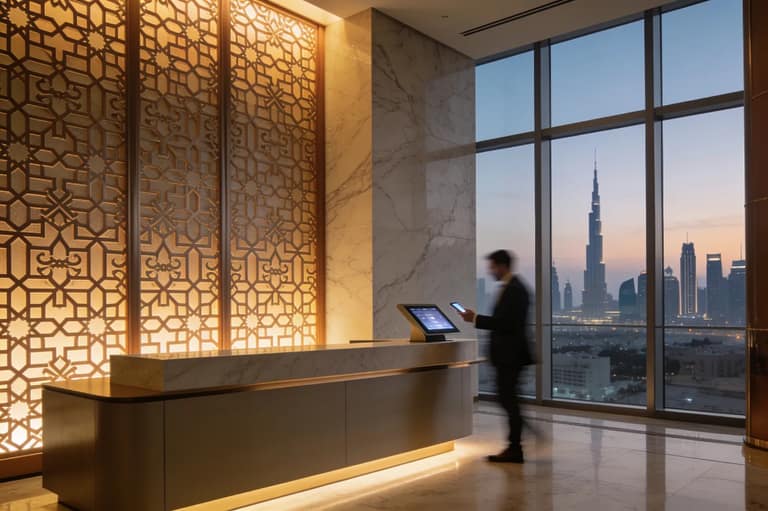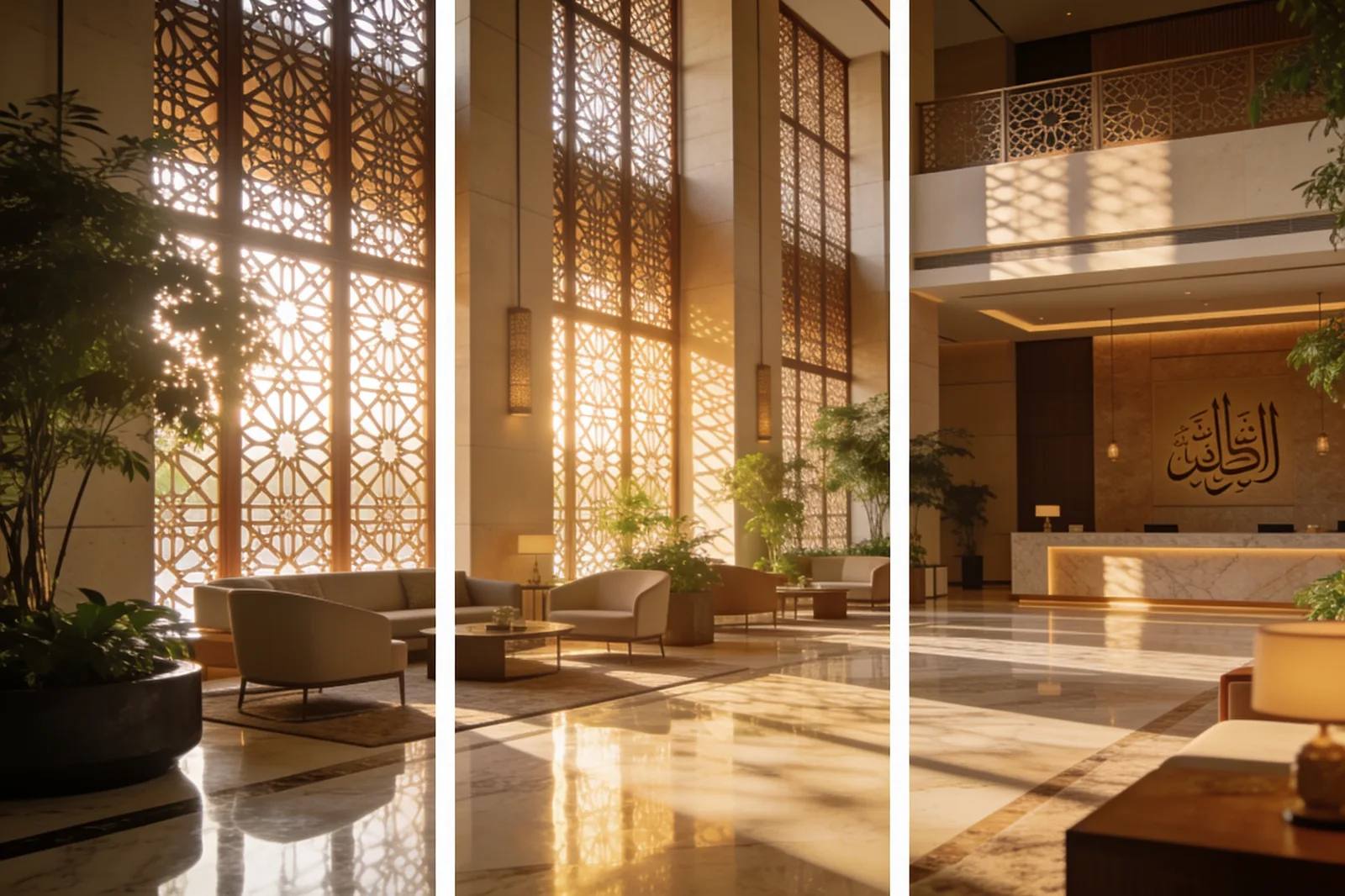
The best hotels in Dubai differentiate themselves through authentic storytelling rather than standard amenities. Properties like Jumeirah Marsa Al Arab and The Lana weave Emirati heritage, architectural vision, and local artistry into guest experiences. This narrative-driven approach builds emotional loyalty and sets these hotels apart in a saturated luxury market.
Why story is the real currency of Dubai luxury
Dubai's hotel market has reached saturation. Every major chain operates here, and marble lobbies with gold leaf no longer impress discerning guests. What separates a property that fills rooms from one that builds devotion is whether travelers feel they have discovered something with meaning beyond convenience.
According to Campaign Middle East, 77% of consumers in Dubai would switch to a competitor that demonstrates superior understanding of their preferences. Meanwhile, 74% of GCC hospitality brands worry about missing the emotional mark with their audiences, compared to 54% globally. The gap between traveler expectation and hotel delivery is where storytelling wins.
Major rating frameworks now codify this shift. The Michelin Guide's 2026 Key selection for the UAE, covering 25 properties across Dubai, Abu Dhabi, and Ras Al Khaimah, evaluates hotels on sense of place, architectural character, and cultural resonance rather than amenities alone. Prix Versailles selected Jumeirah Marsa Al Arab for its World's Most Beautiful Hotels list, praising its synthesis of regional maritime heritage and avant-garde yacht architecture.
Defining authentic storytelling in hospitality marketing
Authentic storytelling in hotels involves the deliberate alignment of a property's physical design, service rituals, digital presence, and guest journey around a coherent narrative rooted in place. It moves beyond decoration to operational consistency.
This means the story predates the marketing. A hotel built to evoke Bedouin astronomy does not merely add desert photography to its website. It structures evening activities around celestial navigation, trains staff in relevant folklore, and sources materials from regional artisans. The narrative becomes operational, not ornamental.
The alternative, increasingly visible, is tokenism: a single lobby artwork labeled "local," a welcome drink with saffron, or a paragraph about pearl diving in a press kit. Discerning travelers, particularly those researching boutique hotels in Dubai, detect this immediately. Authenticity requires investment in research, local partnerships, and design decisions that may cost more and photograph less dramatically.
Three of the best hotels in Dubai with distinct storytelling architectures
Jumeirah Marsa Al Arab: Completing the maritime trilogy
Shaun Killa's superyacht-inspired structure, opened in March 2025, completes Jumeirah's nautical architectural narrative alongside Burj Al Arab and Jumeirah Beach Hotel. The property does not simply resemble a yacht. Its engineering references regional dhow-building techniques, its interiors channel marine craftsmanship, and its positioning on the shoreline reclaims Dubai's pre-oil relationship with the Gulf waters.
The storytelling here is macro-architectural and cinematic. Prix Versailles recognized this explicitly, with Secretary General Jérôme Gouadain noting that the honored hotels elevate expertise and local heritage through extremely advanced design work and clear collaboration between creators and their regions.
Atlantis The Royal, ranked 4th globally on The World's 50 Best Hotels 2026 list and named Best Hotel in the Middle East, operates in a similar register: spectacle as narrative, architecture as protagonist. These properties build worlds guests enter rather than rooms they occupy.
The Lana, Dorchester Collection: Design as cultural dialogue
Opened in February 2024 in Business Bay, The Lana constructs its identity through Foster + Partners architecture and Gilles & Boissier interiors housing over 50 bespoke MENASA artworks. The story focuses on contemporary Middle Eastern, North African, and South Asian creativity curated within a globally recognized design framework.
This approach attracts travelers who seek cultural engagement without heritage performance. The art program is central to how the property distinguishes itself from both local competitors and other Dorchester Collection addresses. Guests who value this can See hotels in Dubai that foreground similar design-art narratives.
Bab Al Shams: Bedouin authenticity under Rare Finds
Kerzner's 2025 rebranding of Bab Al Shams under its Rare Finds portfolio represents a different model: heritage as lived practice rather than visual reference. The property centers its guest journey on authentic Bedouin traditions and desert astronomy, with activities and service rituals designed to transmit knowledge rather than atmosphere alone.
This is storytelling as education, where the guest becomes participant rather than spectator. The desert setting permits immersion that urban properties cannot replicate, but the critical element is the operational commitment to narrative consistency across every touchpoint.
How digital channels amplify hotel narratives
The same platforms that spread stories can flatten them. Dubai hotels now deploy distinct social media architectures depending on their scale and positioning.
Boutique properties like Hotel Indigo Dubai Downtown, FORM Hotel Al Jaddaf, and XVA Art Hotel build digital narratives around hyper-local heritage. Sara Serpilli, Art Manager at Hotel Indigo Dubai Downtown, explains: "Art's role at our hotel goes beyond aesthetics, it creates an emotional connection with our visitors and guests from all over the world. It helps cement Hotel Indigo Dubai Downtown in their memory and attracts travellers and first-time visitors who have heard about it and want to discover what our boutique art hotel has to offer."
The biggest shift we've seen is that social isn't just pretty pictures anymore, it's becoming a decision-making tool. People watch our stories and then book the same day. When we post content from our restaurants or show the actual view from a suite, we see an increase in enquiries. We've also noticed that people crave real moments and authenticity, not polished perfection.
Elmira Yesmakova, Director of Marketing at SLS Dubai
These properties spotlight neighborhood dhow-building yards, resident regional artists, and artisan collaborations such as the Fatima Bint Mohamed Bin Zayed Initiative. The content is specific, documentary, and neighborhood-bound.
Ultra-luxury mega-resorts pursue cinematic lifestyle worldbuilding. This authenticity pivot matters because 80% of viewers take action within one week of watching travel video content on short-form platforms in the MENA region, according to Hotelier Middle East. The window between narrative exposure and booking decision has compressed to days or hours.
Email newsletters and website copy extend this architecture. Properties that maintain narrative consistency across channels, rather than fragmenting into promotional discounting, build recognition that survives price comparison. Those interested in how hotels engineer this conversion path can explore strategies for elevating hotel website user experience to increase direct bookings.
Converting storytelling into guest loyalty
Emotional loyalty, the kind that survives competitive pricing and location convenience, requires that guests feel their stay contributed to their self-narrative. They did not merely sleep well; they became someone who understands desert astronomy, who collects contemporary MENASA art, or who recognizes Shaun Killa's architectural references.
The commercial evidence is measurable. Narrative-driven digital campaigns at Grand Hyatt Dubai achieved a 16% increase in direct room bookings, according to Sojern case study data. Broader research across the Middle East indicates that integrating cohesive content marketing, localized narrative touchpoints, and real-time personalized messaging generates direct booking boosts ranging from 15% to 25%, while reducing OTA dependency.
This is guest relationship architecture. When a property's story becomes part of how a traveler describes their own identity, they become an advocate who recommends with specificity. They do not say "great hotel." They explain why the dhow-building yard tour changed their understanding of maritime Dubai.
For hospitality professionals, this underscores why cultural travel experiences shape luxury hotel design at the foundational level, not as afterthought.
Selecting your stay by narrative fit
Discerning travelers can apply this framework to their own planning. The question is not which hotel has the best pool, but which story aligns with your travel values and what you hope to understand about Dubai.
- Identify your travel motivationAre you seeking cultural education, design immersion, architectural spectacle, or environmental reconnection? Each maps to different narrative types.
- Examine the property's origin storyRead beyond the amenities list. Who designed it? What local partnerships does it maintain? Does the narrative predate the marketing, or was it applied afterward?
- Verify narrative consistency across channelsCheck Instagram, the website, and recent guest reviews. Do they describe the same property, or does the story shift by platform?
- Assess staff knowledge as story transmissionContact the property with a specific question about its narrative (the art program, the architectural concept, the heritage activities). The depth of response indicates operational commitment.
- Book direct when narrative mattersProperties invested in storytelling often offer direct-booking benefits that extend the narrative (curated arrivals, exclusive access to experiences not listed on OTAs).
Travelers ready to match their values with the right property can See hotels in Dubai curated for narrative depth rather than star rating alone.
Trends shaping Dubai hotel marketing in 2026
Several developments will test which Dubai properties maintain authentic storytelling under pressure. The expansion of Michelin Key evaluations to 25 UAE properties creates incentive for narrative investment, but also risk of performative cultural references designed to impress inspectors rather than guests.
The rise of AI-personalized marketing, discussed in mastering luxury travel experiences through AI and human personalization, offers tools to tailor narrative delivery to individual preferences. The challenge is whether personalization enhances authenticity or fragments it into algorithmic pieces.
Short-form video's dominance in travel decision-making will continue. Properties that generate genuine behind-the-scenes content, as Yesmakova describes, will maintain advantage over those relying on produced perfection. The 80% action-within-one-week statistic rewards immediacy and authenticity over production value.
Finally, the distinction between boutique micro-neighborhood immersion and mega-resort worldbuilding will likely blur. Expect larger properties to attempt localized storytelling and boutique properties to seek broader recognition, with mixed success. The properties that sustain coherence at either scale will define the next generation of Dubai hospitality.
For travelers who believe where you stay shapes what you learn, the research begins with story. See hotels in Dubai that lead with narrative, and plan a stay that resonates beyond the itinerary.