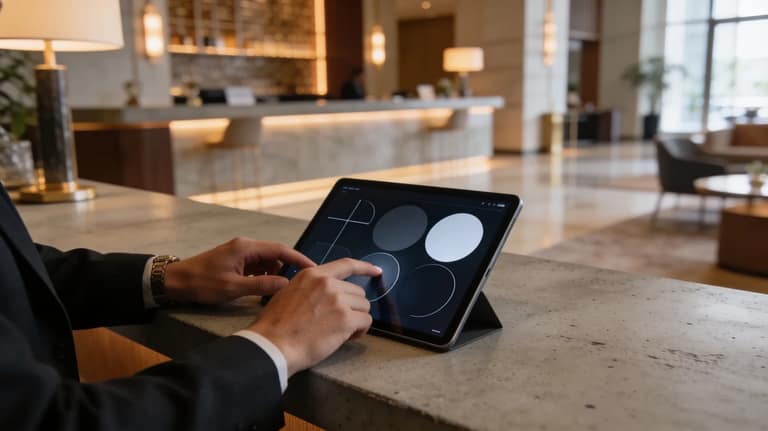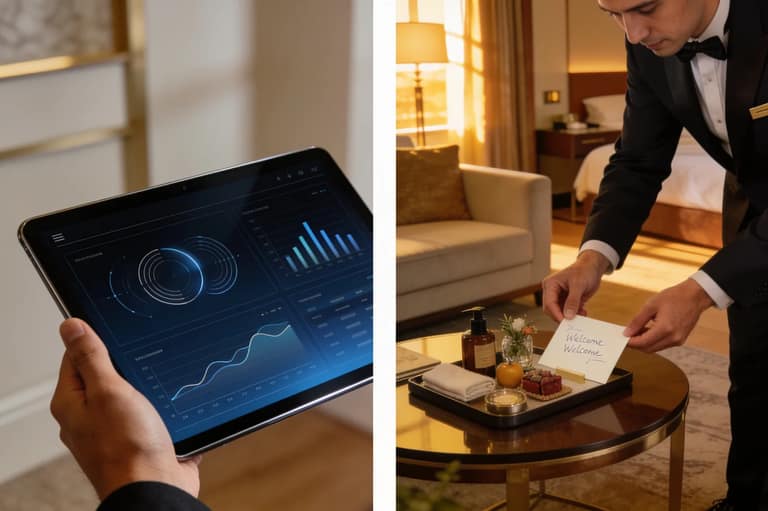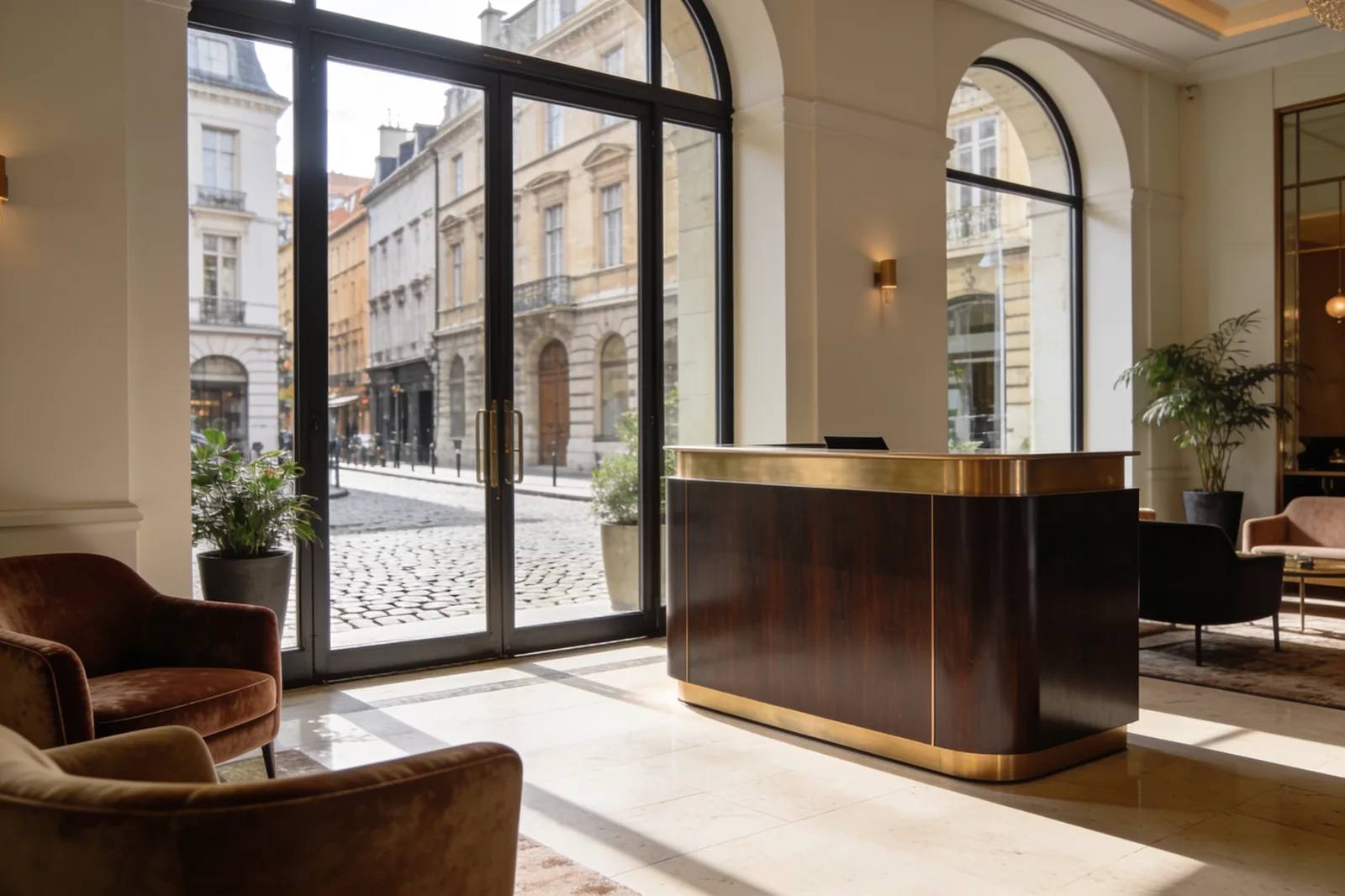
Boutique hotels that appear in Google's Map Pack for "hotels near me" capture travelers at peak purchase intent. The properties winning these searches combine precise Google Business Profile configuration, mobile-first booking experiences, and visual storytelling that chain hotels rarely match. This guide covers the specific tactics independent hoteliers need to dominate local search results and convert map impressions into direct bookings.
What the Map Pack means for boutique hotels
The Map Pack, also called the Local Pack, is the block of three business listings that appears above organic search results when Google detects local intent. For accommodation searches, it displays a map with pinned properties alongside ratings, photos, price indicators, and direct booking links. This placement is decisive. Properties in the Map Pack receive the majority of clicks for "hotels near me" queries, while results buried below the fold compete for residual traffic.
Boutique hotels possess structural advantages here. Google's ranking formula weighs relevance, distance, and prominence. Chain properties optimize for scale and standardized service. Independent properties can outmaneuver them on relevance and prominence through hyperlocal specificity, distinctive visual identity, and rapid guest engagement that algorithms interpret as quality signals.
How travelers behave when they search 'hotels near me'
Over 60% of accommodation and travel searches now occur on mobile devices, according to arisehotelmarketing.com. These queries share three characteristics that shape optimization strategy.
First, immediacy dominates. The searcher is typically already in transit, has arrived unexpectedly, or is planning a trip within days. They need confirmation of availability, not inspiration. Second, location precision matters more than brand recognition. The query implies proximity filtering, and Google's algorithm responds by weighting distance heavily. Third, visual validation precedes booking decisions. Travelers swipe through photos before reading descriptions, and they read recent reviews to confirm that the property matches its imagery.
This behavior sequence, search, swipe, review scan, click, means that every element of your digital presence must function as a conversion asset. A beautiful website means nothing if your Map Pack listing displays outdated photos or a three-week-old review without response.
Claiming and optimizing your Google Business Profile
Google Business Profile for hotels operates differently from standard local business listings. Hotel profiles require dedicated Hotel Attributes rather than conventional Google Posts, and direct integration with Google Hotel Center enables Free Booking Links that display your direct rates alongside OTAs without advertising spend. Prostay's 2026 hotel playbook confirms that properties skipping this integration surrender direct booking opportunities to aggregator listings.
Category selection
Your primary category must be precise. Select "Boutique hotel" or "Design hotel" rather than the generic "Hotel" classification. Add secondary categories that capture your specific offerings: "Bed & breakfast" if applicable, "Event venue" for properties with significant meeting space, or "Restaurant" if your dining operation operates independently and welcomes non-guests. Google's category system influences which search queries surface your property, and imprecise categorization is among the most common errors weakening boutique hotel visibility.
Attributes configuration
Hotel Attributes in Google Business Profile cover check-in and check-out hours, sustainability certifications, accessibility features, pet policies, and room-specific amenities. Configure these meticulously. Attributes function as search filters; a traveler filtering for "Pet-friendly" or "Electric vehicle charging" will only see properties where these attributes are explicitly set. Navigate to the Info tab in your dashboard, locate the Attributes section, and select every applicable option. Update these quarterly as your amenities evolve.
Business name compliance
Google's guidelines prohibit keyword stuffing in business names. Your listing must reflect your actual registered business name. "The Harrison, Boutique Hotel Downtown" violates policy if your legal name is simply "The Harrison." Enforcement has tightened, and violations risk suspension. If your legitimate name contains descriptive elements, ensure they appear on your signage, website, and registration documents.
Description optimization
A well-optimized description opens with your unique identity, specifies your neighborhood context, and closes with practical differentiators.
Example: well-optimized description
"The Harrison occupies a restored 1920s textile warehouse in the Arts District, three blocks from the Contemporary Museum. Twelve rooms feature original timber beams, locally woven textiles, and rainfall showers. Complimentary breakfast showcases regional producers. Rooftop access until midnight."
This description names a specific location, cites a landmark for geographic anchoring, lists tangible amenities, and implies an experience. A poorly optimized variant would read: "Best boutique hotel in city center. Luxury accommodations, free WiFi, great location near attractions. Book now for best rates." This version wastes space on generic claims, omits neighborhood specificity, and triggers spam associations through promotional language.
NAP consistency across every directory
Name, Address, and Phone Number consistency remains a foundational ranking factor. Variations across Yelp, TripAdvisor, Apple Maps, Booking.com, and local tourism registries fragment your citation authority and confuse search algorithms. Audit every platform where your property appears. Common failure points include:
- Abbreviated street names on some platforms, spelled out on others
- Old phone numbers retained by OTA partner listings
- Suite or unit numbers formatted inconsistently
- Property names altered by third-party aggregators
Standardize on a single format, then update or claim every listing to match. Tools like Moz Local or BrightLocal automate synchronization, but manual verification of high-authority platforms remains necessary. Duplicate listings created by legacy rebrands or OTA partnerships require consolidation through Google's duplicate reporting process or direct platform appeals.
Leveraging boutique identity for local relevance
Chain properties compete on recognition and loyalty programs. Boutique hotels compete on specificity. Your local SEO strategy should embed this specificity into every content layer.
Neighborhood keywords outperform city-level terms for Map Pack placement. Optimize for "hotel near [landmark]," "accommodation in [neighborhood name]," and "[district] boutique stay." Create website landing pages for each significant nearby attraction, describing walking distance, recommended times to visit, and your property's relationship to the location. A page titled "Staying near the Riverside Market: A Guest Guide" captures search intent that generic "Our Location" pages miss.
Local schema markup helps search engines parse your services with precision. Implement Hotel schema via JSON-LD on every page, specifying your address with geo-coordinates, room types with occupancy limits, price ranges, and amenity details. Include LocalBusiness markup for any separately operated facilities, such as restaurants or spas open to the public. Google's Structured Data Testing Tool validates implementation before deployment.
The "Small Business" attribute, introduced by Google in 2023 and expanded through 2026, allows independent properties to flag their status formally. Google's official announcement states that "merchants can identify themselves with a new small business attribute on Search and Google Maps," making it "easier for shoppers to narrow down their searches and be intentional about shopping with their favorite (or soon-to-be-favorite) businesses." Activate this in your profile's identity settings.
Visual storytelling and review management
Photos drive Map Pack performance measurably. Properties with quality photos receive 42% more direction requests and 35% more website click-throughs than those without, according to ReplyOnTheFly's 2026 analysis. The research is unambiguous about which images convert: guest rooms and clean bathrooms generate the highest booking engagement. Properties should upload at least 20 to 25 high-quality photos, including a minimum of four images per room type with dedicated bathroom photography.
Refresh your photo set quarterly. Prioritize natural light, accurate color representation, and lived-in staging over sterile perfection. User-generated photos in reviews provide authentic corroboration that polished property photography cannot replicate.
Reviews account for approximately 20% of Map Pack ranking weight in the 2026 Whitespark Local Search Ranking Factors survey. The volume, velocity, and response pattern matter more than perfect scores. A property with 4.6 stars and forty recent reviews, each with an owner response within 24 hours, outperforms a 4.9-star property with stale feedback.
Implement automated review solicitation at checkout. Email or SMS timing is critical: send within two hours of departure while the experience is fresh, but after the guest has physically left and cannot extend their complaint in person. Keep the request to one click, linking directly to your Google review form. Personalize the message with the staff member who checked them out, or reference a specific service they used.
Respond to every review within 48 hours. Thank positive reviewers with specificity. Address negative feedback by acknowledging the issue, stating any corrective action taken, and inviting direct follow-up. This response pattern signals operational attentiveness to prospective guests and behavioral engagement to Google's ranking systems.
Mobile-first optimization for direct bookings
Mobile traffic means nothing if the booking experience fails. Google's Core Web Vitals benchmarks, applied through mobile-first indexing, define performance thresholds that hotel websites must meet. As of 2026, the targets are Largest Contentful Paint under 2.5 seconds, Interaction to Next Paint under 200 milliseconds, and Cumulative Layout Shift under 0.1. Only 49.1% of mobile websites globally pass all three thresholds, according to PageSpeed Matters. Hotel sites, typically media-heavy, disproportionately fail on LCP.
The business consequence is direct. A 0.1-second improvement in mobile site speed correlates with a 10.1% lift in mobile travel conversion rates, per Deloitte and Google benchmarks cited by Hafencity.dev.
Practical optimization steps include compressing hero images to WebP format with lazy loading, eliminating render-blocking JavaScript on booking widget scripts, and preloading critical above-fold assets. Your booking engine must support one-tap date selection, autofill for returning guests, and Apple Pay or Google Pay integration. Click-to-call buttons should be persistent and thumb-sized, never buried in hamburger menus.
Consider how AI and human personalization can streamline your mobile experience without adding friction. Intelligent pre-population of guest preferences reduces form fields and abandonment.
Measuring local visibility and conversion
Vanity metrics mislead. Track these specific indicators instead:
| Metric | What it measures | Tool source |
|---|---|---|
| Map Pack impressions | How often your listing appears in the three-pack for target queries | Google Business Profile Insights |
| Direction requests | Physical visit intent from mobile searchers | Google Business Profile Insights |
| Phone calls from profile | Direct inquiry volume bypassing OTA commissions | Google Business Profile + call tracking number |
| Photo views vs. competitor median | Visual engagement relative to market | Google Business Profile Insights |
| Review velocity | New reviews per month and response rate | Manual tracking or reputation platforms |
| Free Booking Link clicks | Direct rate inquiries from Google Hotel Center | Google Hotel Center dashboard |
Set monthly review cycles. Compare your Map Pack appearance rate for "hotels near me" and five neighborhood-specific variants against three direct competitors. If a competitor consistently outranks you despite inferior reviews or location, audit their category selection, photo freshness, and attribute completeness for gaps in your own profile.
For properties exploring deeper direct booking strategy optimization, map-level data should inform website content priorities. High direction-request volume with low booking conversion suggests pricing visibility or rate parity issues. High photo engagement with low click-through indicates description or review problems.
What to prioritize this quarter
- Audit NAP consistencyStandardize your business name, address, and phone across Google, Apple Maps, Yelp, TripAdvisor, and top OTAs. Eliminate duplicates.
- Configure Hotel Attributes completelyFill every applicable attribute in Google Business Profile, including sustainability, accessibility, and room-specific amenities.
- Integrate Google Hotel CenterEnable Free Booking Links to display direct rates alongside OTAs. Verify rate parity daily.
- Shoot and upload room and bathroom photographyTarget 25 high-quality images minimum, with four per room type and dedicated bathroom shots for each category.
- Deploy automated review solicitationConfigure checkout-triggered SMS or email with direct Google review link. Commit to 24-hour response times.
- Test mobile booking flow weeklyMeasure LCP and INP on your booking engine using PageSpeed Insights. Target sub-2.5s and sub-200ms respectively.
Properties that execute these six steps systematically build compounding advantages. Each positive review, each photo upload, and each attribute refinement feeds Google's prominence feedback loop. Chain competitors with centralized, slow-moving approval processes cannot match this iteration speed.
Your boutique identity is not a constraint in local search. It is the specific advantage that travelers filtering for authenticity, neighborhood character, and independent operation are actively seeking. The technical infrastructure to connect these travelers with your property exists. Execution determines who captures the booking.
Turn map impressions into confirmed reservations
Your property's unique character already differentiates you from chain competitors. The right digital infrastructure ensures travelers searching "hotels near me" discover that difference before they ever reach an OTA. See the services designed specifically for independent hoteliers ready to own their local search presence.