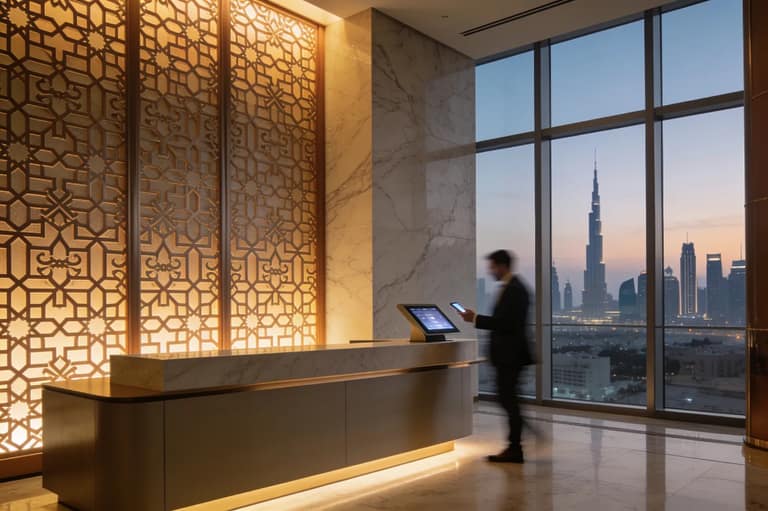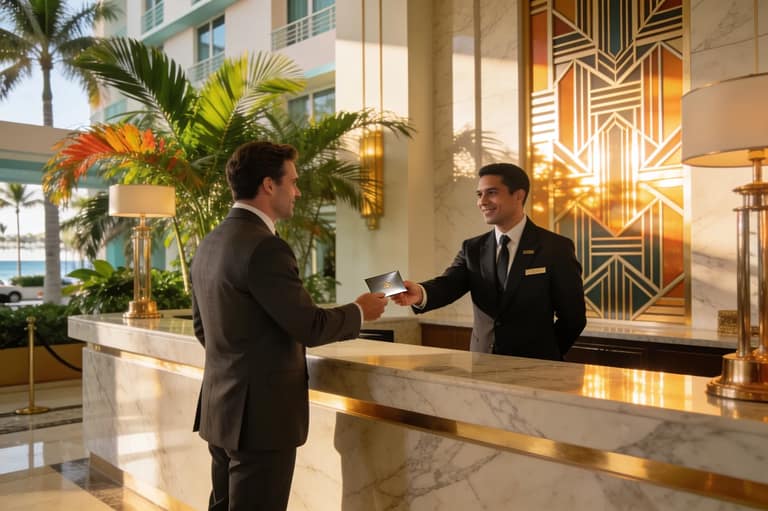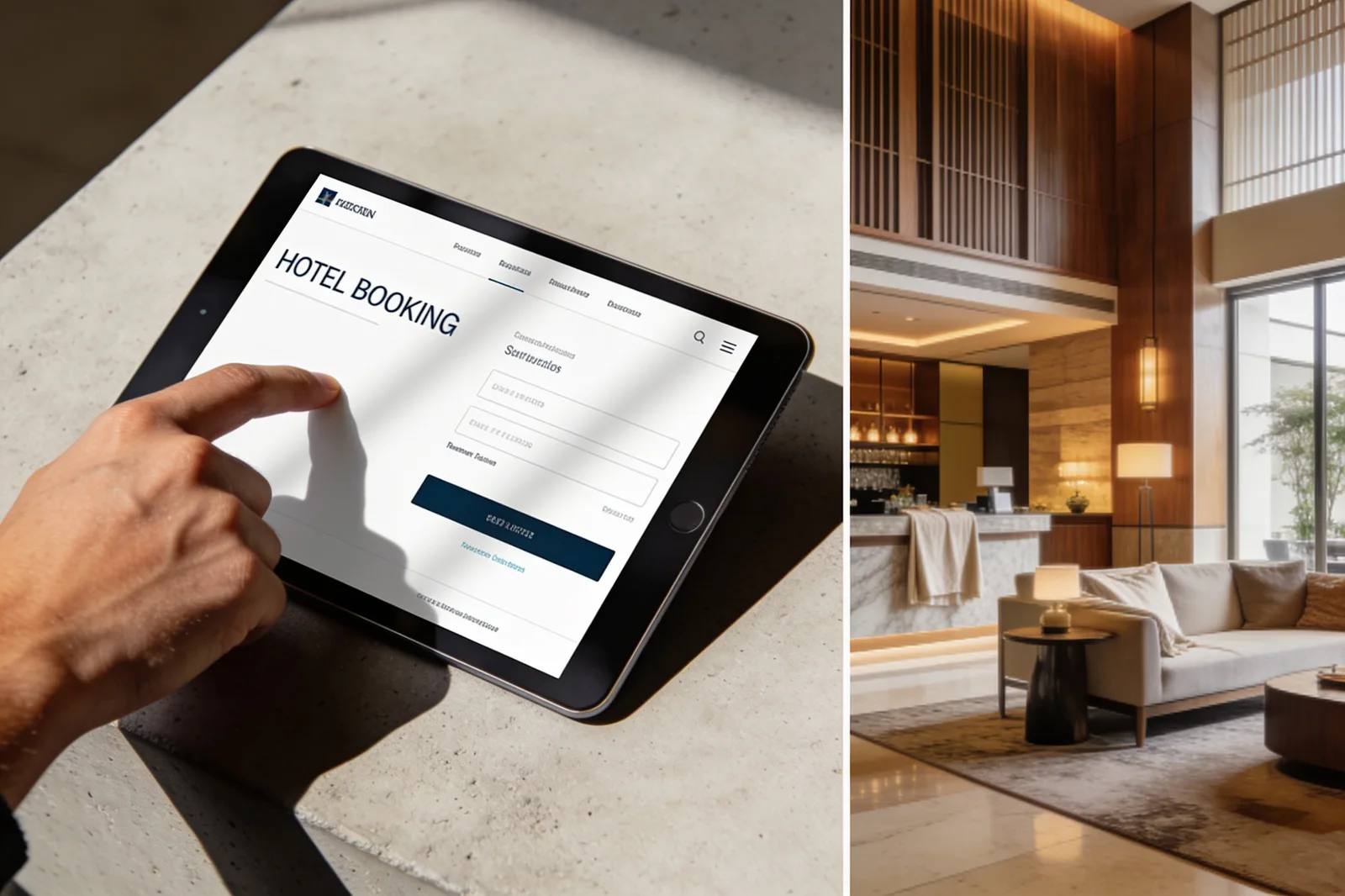
Design is no longer a finishing touch for luxury hotels. It is a direct booking driver. As the primary hotel design trend, aesthetic choices made for the lobby, guest room, and spa become digital assets that either convert or lose the sale when a guest's first encounter happens on a screen. Properties that align their physical design language with their online presence build visual trust, reduce bounce rates, and capture bookings that would otherwise flow to online travel agencies.
Why design is now a direct booking driver
The shift is straightforward. A potential guest scrolling through dozens of listings makes decisions in seconds, and visual consistency between what they see online and what they experience on arrival builds the trust necessary for a high-ticket transaction.
This trust factor matters especially for luxury bookings, where the financial commitment is significant and the risk of disappointment feels personal. The cost of visual misalignment is not just one lost booking.
Current luxury hotel design trends impacting appeal
Four design directions dominate luxury hospitality in 2026, each with specific implications for how properties present themselves digitally.
Biophilic integration
Biophilic design embeds natural elements, living systems, and organic patterns into built environments. In 2026 luxury standards, this goes beyond a few potted plants. It means living walls with integrated irrigation, natural ventilation pathways, materials that age and change with humidity, and lighting systems that track circadian rhythms. The biophilic property does not merely look green. It behaves like an ecosystem.
Photography must be refreshed seasonally, or the website must use video and interactive elements that convey growth and change rather than frozen perfection.
Warm minimalism versus maximalist storytelling
Warm minimalism replaces the cold grays and stark whites of earlier decades with complex warm neutrals, biophilic earth tones, and deep jewel accents. Materials show hand: lime-washed plaster, raw silk, unlacquered brass that tarnishes, timber with visible grain and knot.
A property in Jaipur might combine block-printed textiles, antique brassware, and contemporary sculpture in deliberate conversation. The key is curatorial intention, not accumulation.
Warm minimalism requires raking light to reveal texture and surface variation. Maximalist spaces need compositional discipline to show pattern relationships without visual chaos.
Sustainable materials visibility
McKinsey & Company notes that hotels are prioritizing planet and employee health, potentially sacrificing traditional amenities like spas or pools for energy efficiency while leveraging reconfigurable guest rooms and technology to maintain service quality. Guests see the structural logic of passive cooling, the material honesty of unbleached linens, the repair patina of well-used objects.
Close-up photography of material sources, short videos of craft processes, and clear labeling of certifications build credibility.
Hyper-local cultural curation
The most competitive luxury properties now function as cultural institutions as much as accommodation providers. They commission local artists, revive endangered crafts, and design spaces that could exist nowhere else. This approach connects directly to how cultural travel experiences shape luxury hotel design, where guest expectations have moved beyond decoration to meaningful cultural engagement.
Translating physical aesthetics to digital presence
Photography and video are the translation layer between physical design and digital experience. The goal is evocation: making the screen visitor feel something specific about texture, light, and spatial sequence.
Photography styles that convey texture
Macro photography reveals what wide shots cannot. A frame-filling image of hand-loomed linen shows fiber variation and weave tension. Close-up of plaster catches the irregularity of trowel marks. The viewer's hand knows what that surface would feel like.
Natural light photography requires timing and technique. Shoot during the "golden hours" when sunlight enters at angle, revealing volume and surface. Avoid flash, which flattens and falsifies. For properties with strong biophilic elements, photograph at moments when dappled light moves across surfaces, suggesting living environment rather than static set.
Wide-angle captures serve spatial sequence, not individual rooms. Show how the lobby opens to courtyard, how corridor width changes before arrival at suite, how bathroom relates to bedroom through material continuity. The guest journey through space matters more than any single room's dimensions.
Avoiding generic stock imagery
Stock photography creates immediate visual distrust. The guest who sees the same smiling couple, the same perfectly arranged breakfast, the same sunset view on multiple properties learns to ignore all of it. Worse, stock sets expectations the property cannot meet. When the actual bathroom fixtures differ from the stock bathroom, the guest registers disappointment before arrival.
Commission photography that no other property could use. Shoot your actual staff, your specific morning light, your particular material combinations. The cost difference between stock and custom pays back in conversion rate improvement and review score protection.
Website palette mirroring room experience
Color extraction from property photography creates digital palettes that feel native rather than applied. Sample wall colors, material tones, and light temperatures from actual spaces. Use these as website background colors, button states, and transition elements. When a guest moves from homepage to booking engine, the color journey should feel like moving from lobby to corridor to room.
- Custom photography of actual spaces and materials
- Color palettes extracted from property imagery
- Video showing light change and material aging
- Macro detail shots that invite tactile imagination
- Generic stock imagery used across multiple properties
- Color palettes chosen for trend rather than property truth
- Overprocessed HDR photography that falsifies light quality
- Discrepancy between website imagery and actual room condition
Integrating design elements into website UX
The visual language established in photography must extend through every interface element. Luxury is communicated through restraint, precision, and sensory coherence.
Hospitality Net explains that luxury hotels use 'inliners' (messages embedded directly within the page as native content) to maintain brand consistency and visual continuity in booking journeys, rather than using disruptive overlays.
Whitespace and typography reflecting luxury
Generous whitespace signals confidence. A property that does not crowd its website with offers and urgency timers suggests occupancy health and exclusivity. The negative space around elements should relate to the spatial generosity of the property itself. A compact urban boutique might use tighter grids; a resort with expansive grounds needs breathing room in its digital layout.
Font pairing requires functional hierarchy and tonal consistency. A serif with strong stroke variation for headlines suggests craft and history. A clean sans-serif for body text ensures legibility at small sizes. Avoid more than two type families. The pairing should feel as considered as the property's material palette.
Contrast ratios matter for accessibility and perceived quality. Text below WCAG AA standards (4.5:1 for normal text, 3:1 for large text) reads as careless, and carelessness in digital execution suggests carelessness in physical maintenance. Test all color combinations with objective tools, not visual estimation.
Micro-interactions mimicking tactile experience
Button hover states, page transitions, and loading animations can suggest material behavior. A button that darkens gradually suggests leather patina or timber oxidation. A page transition that slides rather than snaps suggests weight and momentum. These details accumulate into a sense of physicality that supports the property's design story.
Seamless navigation reducing cognitive load
Booking path design should follow visual hierarchy principles established by the property's spatial design. Primary actions, like date selection and room choice, should dominate the visual field. Secondary information, like policy details and amenity lists, should be available without competing for attention.
A pop-up discount code breaks the design narrative; an inline message that respects the page's typographic and spatial logic preserves it.
The correlation between visual consistency and conversion rates
Visual trust directly impacts booking behavior. In high-ticket transactions, the buyer's primary risk is experiential disappointment. Will the reality match the promise? Every visual inconsistency amplifies this risk.
How mismatched expectations damage performance
When OTA photography, website imagery, and actual condition diverge, guests arrive with uncertainty that colors their entire stay. They inspect rather than enjoy. They photograph deficiencies for dispute rather than pleasures for sharing. The psychological contract is broken before check-in completes.
This damage extends beyond individual stays. Negative reviews from disappointed guests reduce future conversion rates for all channels. Acquisition costs rise to replace the direct bookings that reputation damage has driven to competitors. Lifetime value collapses when guests who would have returned choose properties with more reliable visual promises.
Aligned branding and direct repeat bookings
Properties that maintain visual consistency across discovery, booking, arrival, and departure build what behavioral economists call "processing fluency." The guest's brain recognizes patterns, relaxes vigilance, and shifts to enjoyment mode. This positive association transfers to the booking channel. The property that delivered exactly what its website promised becomes the property the guest trusts enough to book directly next time.
For properties seeking to strengthen this cycle, elevating hotel website user experience to increase direct bookings requires treating every pixel as part of the same design system that governs the physical property.
Visual consistency audit checklist
- Compare current website hero images against actual lobby and room conditions
- Extract color palette from property photography and check against website CSS
- Review OTA images for age and accuracy; request updates where stale
- Test booking path on mobile for visual coherence with desktop experience
- Survey recent guests on whether website prepared them accurately for arrival experience
- Schedule photography refresh before seasonal changes alter biophilic elements
What works in high-performing boutique sites
Successful design-led hotel websites share structural patterns rather than identical templates. Understanding these patterns helps properties evaluate their own digital presence against functional benchmarks.
Immersive homepage with clear conversion path
The best-performing sites open with full-bleed video or carefully sequenced imagery that establishes atmosphere within three seconds. Navigation is minimal and persistent. The booking interface is present but not dominant, suggesting availability without urgency. Scrolling reveals spatial sequence: public spaces, guest rooms, dining, wellness, location. Each section uses the property's actual photography and extracted color palette.
Room presentation that manages expectation
High performers show multiple angles of each room category, including the view from the bed, the bathroom in use (towels hung, products placed), and the room at different times of day. They label square footage accurately and show floor plans where layout varies. This transparency reduces post-booking anxiety and pre-arrival cancellation.
Mobile experience matching desktop intention
Mobile design for luxury properties must not be a compressed afterthought. Thumb-friendly booking interfaces, swipeable gallery sequences, and thumb-reachable contact options maintain the property's design language at smaller scale. The Miami luxury boutique hotels known for exceptional design and ambiance demonstrate how coastal properties with strong visual identities extend their aesthetic through responsive digital experiences.
Future outlook: immersive tech and personalized design narratives
Three technologies are moving from novelty to operational necessity for design-led luxury properties.
AR room previews
Augmented reality allows prospective guests to place themselves in the room through their device camera. The technology now supports accurate light simulation, showing how afternoon sun falls across the bed or how city lights read from the window at night. For properties with distinctive design features, AR reduces the imagination gap that static photography cannot bridge.
AI-driven personalized homepage layouts
Machine learning can now infer aesthetic preference from browsing behavior and serve homepage layouts emphasizing relevant design elements. A guest whose search history shows interest in biophilic properties sees living walls and natural materials prominently. A guest researching design of culture and local identity in luxury hotel spaces encounters cultural curation content first. The design narrative adapts to the individual without fragmenting the brand.
Digital twins in booking flows
The most advanced properties are creating digital twins, complete 3D models of physical spaces updated in real time. A guest considering booking can virtually walk the route from lobby to room, inspect the current state of biophilic installations, and understand spatial relationships that photography distorts. Forces reshaping the hotel sector's future include technology integration that bridges physical and digital experience, though specific implementation paths vary by market and property scale.
McKinsey's analysis of reconfigurable guest rooms and technology-delivered continuous service suggests that digital twins will soon integrate with operational systems. They will show space alongside availability, configuration, and service timing. The booking journey becomes a design exploration that happens to conclude with reservation.
Your property's design choices are already made. The question is whether your digital presence captures their full commercial value. Properties that align physical and visual identity consistently outperform on direct booking conversion and guest lifetime value.