Luxury travelers booking boutique hotels in Zürich do not choose rooms. They choose narratives of intention, privacy, and human connection. The Virtuoso 2027 Luxe Survey finds that affluent guests now prioritize avoiding queues and camera clicks, valuing trip designers over algorithms, and seeking intentional luxury rather than grand displays of opulence. For Zürich hoteliers, this means generic descriptions of thread counts and marble bathrooms fail. The properties that win direct bookings translate heritage, design, and neighborhood specificity into stories that travelers can inhabit before they arrive.
Why generic content loses in Zürich's luxury market
The shift toward intentional luxury reshapes what content must accomplish. Virtuoso's 2027 Luxe Report, drawing on more than 3,100 travel advisors across over 50 countries, identifies value and safety as increasingly important in destination and method selection. This is not about discounting. It is about travelers who want every element of their stay to feel considered, not accumulated.
Generic luxury copy signals the opposite of intention. In Zürich, where properties like the Widder Hotel compose nine medieval townhomes into a single art-and-design masterpiece, and where the Marktgasse Hotel balances seven centuries of history with Scandinavian restraint, specificity is the competitive advantage.
The EHL research on cultural intelligence in Swiss hospitality adds a critical layer. Some Asian guests perceive Swiss service as inelastic or overly direct when social status cues are missed. Content that preemptively addresses how a property personalizes communication converts better with segments that represent significant luxury revenue. Many Indian visitors come to Switzerland for the first time, treating the trip as once-in-a-lifetime, and some seek filming locations from Bollywood productions like Chandni and Veer-Zaara. Content that recognizes these motivations builds emotional connections.
Narrating design: From Limmatquai stone to glass facades
Zürich's architectural diversity gives boutique hotels built-in narrative material. The task is translating physical elements into emotional hooks without resorting to cliché.
Heritage properties: The weight of time
The Widder Hotel demonstrates how to narrate historical fabric. Each room is individually designed to evoke entering someone's home, not a hotel module. Content for such properties should name specific materials, the century of origin, and the craft of integration. Avoid "historic charm" and use "oak beams from a 14th-century guild house, left exposed where the ceiling vaults meet the 21st-century glass staircase."
The Marktgasse Hotel shows how medieval architecture and contemporary design can coexist in narrative. Its seven centuries of history, filtered through Scandinavian restraint, gives content a specific tension to explore. The story is not the age alone. It is the decision to preserve certain imperfections, to let plaster show its layers, while inserting lighting and furniture that a 2026 guest recognizes as current.
Modern properties: The discipline of restraint
Contemporary Zürich hotels with glass facades along the Limmat face the opposite challenge. Their materials do not carry centuries of patina. Their stories must emerge from what was excluded, the precision of the join, the quality of light through engineered glass. Content here benefits from technical specificity. Name the glass manufacturer if notable. Describe the view axis at a specific hour. Compare the silence of a triple-glazed room to the street below.
Avoid the cliché trap. "Breathtaking views" and "stunning design" signal that no one looked closely. Instead, describe how morning light moves across a particular wall at 8:30 in March. Note the weight of a door, the sound of a latch. These sensory anchors let the reader construct their own emotional response.
Guest experiences as story frameworks
The most effective hotel content does not describe amenities. It stages a guest's day and lets the reader insert themselves.
Behind-the-Scenes as Exclusivity
Luxury travelers in 2026, per Virtuoso's findings, want privacy and human expertise. Behind-the-scenes content satisfies both when it reveals intention rather than process. A video of the head concierge mapping a guest's arrival, noting dietary restrictions and preferred room temperature, demonstrates care without exposing other guests. A photograph of the pastry chef selecting apples from a specific Niederdorf vendor for tomorrow's breakfast tells a story of decision-making that guests rarely see.
Frame these moments as choices, not routines. The story is that someone chose this specific apple, this specific route, this specific greeting. The personalized travel planning techniques that convert luxury shoppers depend on this visibility of human judgment.
Service moments as character development
Personalized service moments work as micro-stories when they include obstacle and resolution. A guest arrives without luggage due to an airline delay. The housekeeper alters the room's lighting to compensate for the guest's missing reading glasses. The receptionist, remembering a previous stay, suggests a walk along the Sihl rather than the more crowded Limmatquai. These narratives require specificity to avoid sentimentality. Name the street. Describe the weather. Zürich's particular reserve demands understatement.
User-generated content, when sourced ethically, extends this framework. Request permission to repost a guest's photograph of their room at dawn. Quote their caption about the silence. Do not edit their language to match brand voice. Always credit by name, never anonymize into "a recent guest."
Anchoring stories in Zürich's cultural identity
Authenticity in Zürich hotel content requires navigating between tourist brochure generalities and hyperlocal obscurity. The goal is recognition from travelers who know the city, and aspiration from those who do not.
Neighborhood specificity over city generalization
"Zürich" as a setting is too large. The luxury hotel neighborhoods in Zürich each carry distinct associations. Niederdorf content references the Grossmünster's shadow at specific hours, the particular density of medieval passages. Enge content acknowledges the lake's presence as atmosphere, not view. Seefeld content recognizes the quieter moneyed residential quality that distinguishes it from the business district.
The EHL research on cultural intelligence in Swiss hospitality suggests that service narratives should account for communication style differences. Content for East Asian markets might emphasize the property's attention to status cues and indirect communication preferences. Content for Indian first-time visitors might reference proximity to Bollywood filming locations, without making this the sole frame.
Tradition without folklore
Zürich traditions exist in daily practice more than in spectacle. Content gains authority by noting how the hotel engages with these rhythms. The property that sources bread from a bakery operating since 1894, rather than the one that mentions "Swiss chocolate" in every paragraph, demonstrates cultural embedding. The hotel that adjusts its breakfast timing during Sechseläuten, without describing the festival for tourists, signals local fluency.
Avoid the checklist approach. Listing "Swiss quality," "Alpine proximity," and "chocolate and cheese" reads as algorithmic. Instead, describe one specific practice that embodies these values through action. The housekeeping standard of replacing flowers not when wilted but when the bloom stage shifts. The maintenance of a single guest room in a configuration unchanged since 1956, available by request. These details carry cultural weight without explicit annotation.
Visual storytelling: Photography and video for Zürich interiors
The principles of visual storytelling for boutique hotels in Zürich differ from generic hospitality photography. The city's light quality, architectural materials, and cultural expectations of restraint create specific requirements.
Light as narrative element
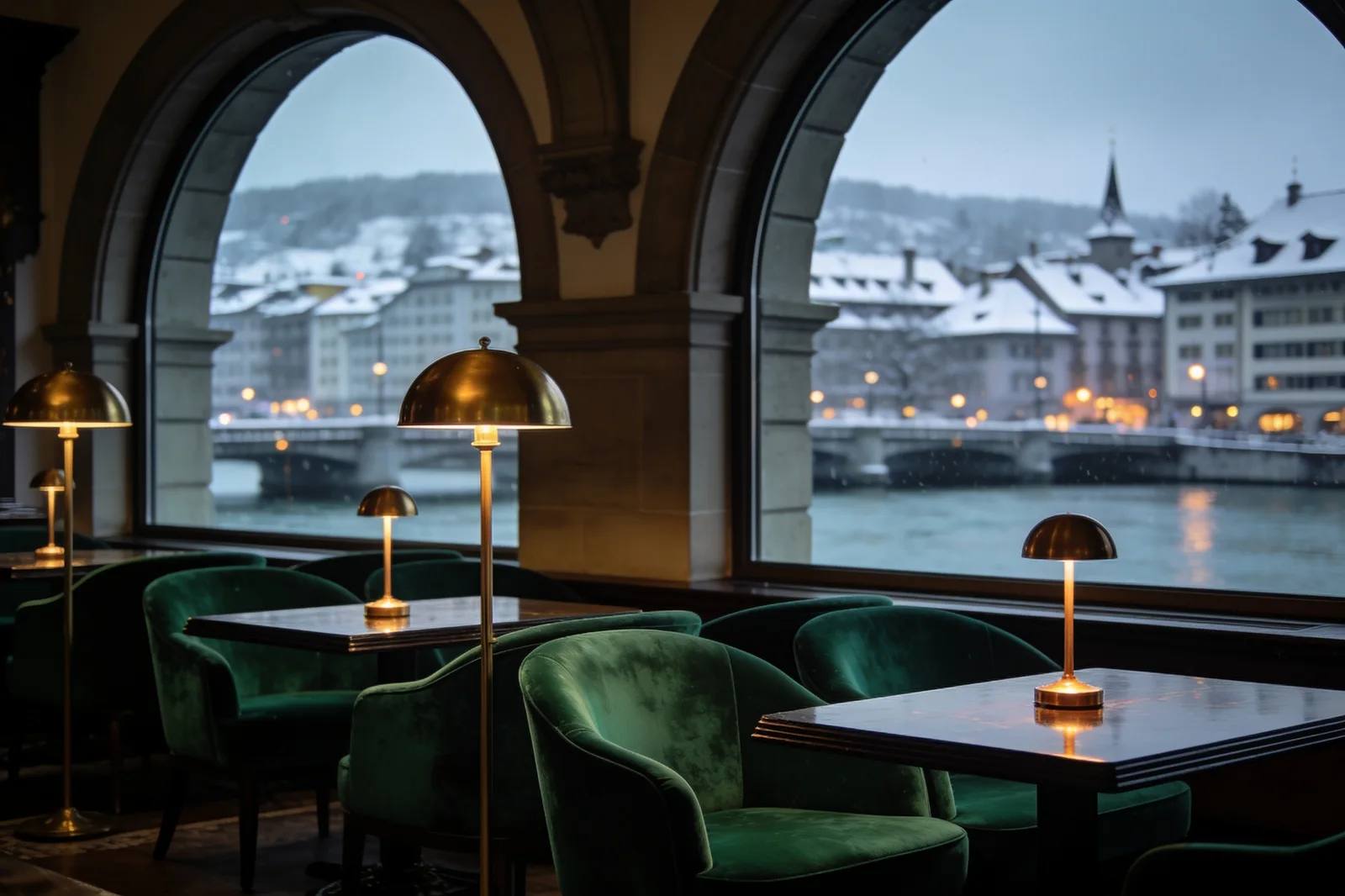
Zürich's northern latitude produces distinctive light conditions that change dramatically by season. Winter interiors photographed in the blue hour, with warm artificial light creating pools against cool window glow, convey a specific emotional register. Summer morning light entering east-facing rooms in the Old Town, filtered by centuries of glass distortion, produces patterns that no filter can replicate.
Composition should emphasize spatial sequence rather than single-room impact. A photograph that shows the threshold between corridor and room, the glimpse of bathroom through a partially open door, the alignment of windows across multiple planes, communicates the architectural intelligence that distinguishes properties like the Widder. The design trend spotlight for 2026's most stylish luxury hotels confirms that travelers increasingly book based on spatial atmosphere rather than amenity lists.
Video duration and structure
Video content for luxury hotel marketing should prioritize mood over information density. Short-form vertical video for Instagram can establish atmosphere with a single sustained shot, a slow pan across a room at a specific time of day, ambient sound intact. Longer content for websites or YouTube should structure around a guest's temporal experience, morning to evening, with chapter markers that allow selective viewing.
No verified Zürich-specific benchmark establishes optimal video length across all platforms. Test engagement against booking behavior rather than view counts alone.
Distributing narratives across marketing channels
Story format must adapt to channel constraints without losing narrative coherence.
| Channel | Format | Example |
|---|---|---|
| Instagram Feed | Single image with extended caption narrative | One room detail, 200-word origin story |
| Instagram Stories/Reels | Sequential micro-moments or slow atmosphere | 24-hour room light study; 20-second silent corridor walk |
| Newsletter | Serialized long-form with booking integration | Monthly "room biography" linking to direct booking |
| Website | Interactive spatial narrative | Scroll-driven room tour with material annotations |
| Third-party platforms | Adapted highlight with platform-native framing | Condensed story for OTA description fields |
Newsletter content benefits from serialization. A monthly feature on a single room, tracing its design decisions, previous guest experiences (anonymized and permitted), and seasonal variations, builds anticipation and return readership. Each installment includes a direct booking link with availability for that specific room, converting narrative investment into action.
Website copy should integrate the themed luxury travel collections approach, grouping rooms or experiences by narrative thread rather than price tier. A "medieval craft" collection might include rooms in heritage properties with documented material histories. A "lake light" collection gathers rooms with specific orientation and glazing characteristics.
Calls to action within narrative content
Direct booking calls to action must emerge from story logic rather than interrupt it. The narrative establishes desire; the action channel fulfills it.
Effective placement includes: after a specific room description, offering that room's availability; following a seasonal observation, suggesting the corresponding booking window; after a guest experience account, proposing a similar arrangement. The action should feel like continuation, not departure.
Language matters. "Reserve the room where this light occurs" outperforms "Book now." "Request the same walk" surpasses "Contact us."
Measuring what storytelling achieves
Storytelling measurement must connect engagement signals to booking behavior. No verified Zürich-specific benchmarks establish universal conversion rates for narrative content. Build your own baseline through structured testing.
Metrics that matter
Track time on page for story-driven content against standard descriptions. Measure scroll depth to identify where narrative attention drops. Monitor email click-through rates from serialized content. Most critically, attribute bookings to content touchpoints through UTM parameters and post-booking surveys that ask which content influenced the decision.
Social engagement metrics require interpretation. High save rates on Instagram indicate future intent; prioritize these posts in paid amplification. Comment sentiment analysis reveals which narrative elements generate emotional response. Direct messages requesting specific rooms or experiences mentioned in content signal successful story-to-desire translation.
Testing and Refinement
A/B test narrative approaches with controlled variables. Compare heritage-focused against design-focused descriptions for the same property. Test video with ambient sound against scored music. Measure whether neighborhood-specific content outperforms city-level framing for identical room types.
The AI and human personalization techniques now available can extend this testing, but the narrative core must remain human-authored. Algorithmic optimization of story elements without editorial judgment produces the genericity that luxury travelers now reject.
What to implement this quarter
Begin with a content audit of existing materials against the specificity standards outlined here. Identify every instance of "luxury," "charming," or "unique" and replace with concrete description. Map your property's actual architectural and material history, then build narrative from verified fact rather than aspiration.
Develop one serialized content thread, newsletter or social, that follows a single room or experience through seasonal change. Establish ethical UGC collection protocols, including explicit permission workflows and credit standards. Test one narrative call-to-action format against your current "Book now" button, measuring clicks and subsequent booking completion.
The properties that capture Zürich's luxury market in 2026 will be those whose content demonstrates the same intentionality that Virtuoso's travelers now seek. The tools for measurement exist. The stories exist in your walls, your neighborhood, your guests' experiences. The work is in the precision of their telling.