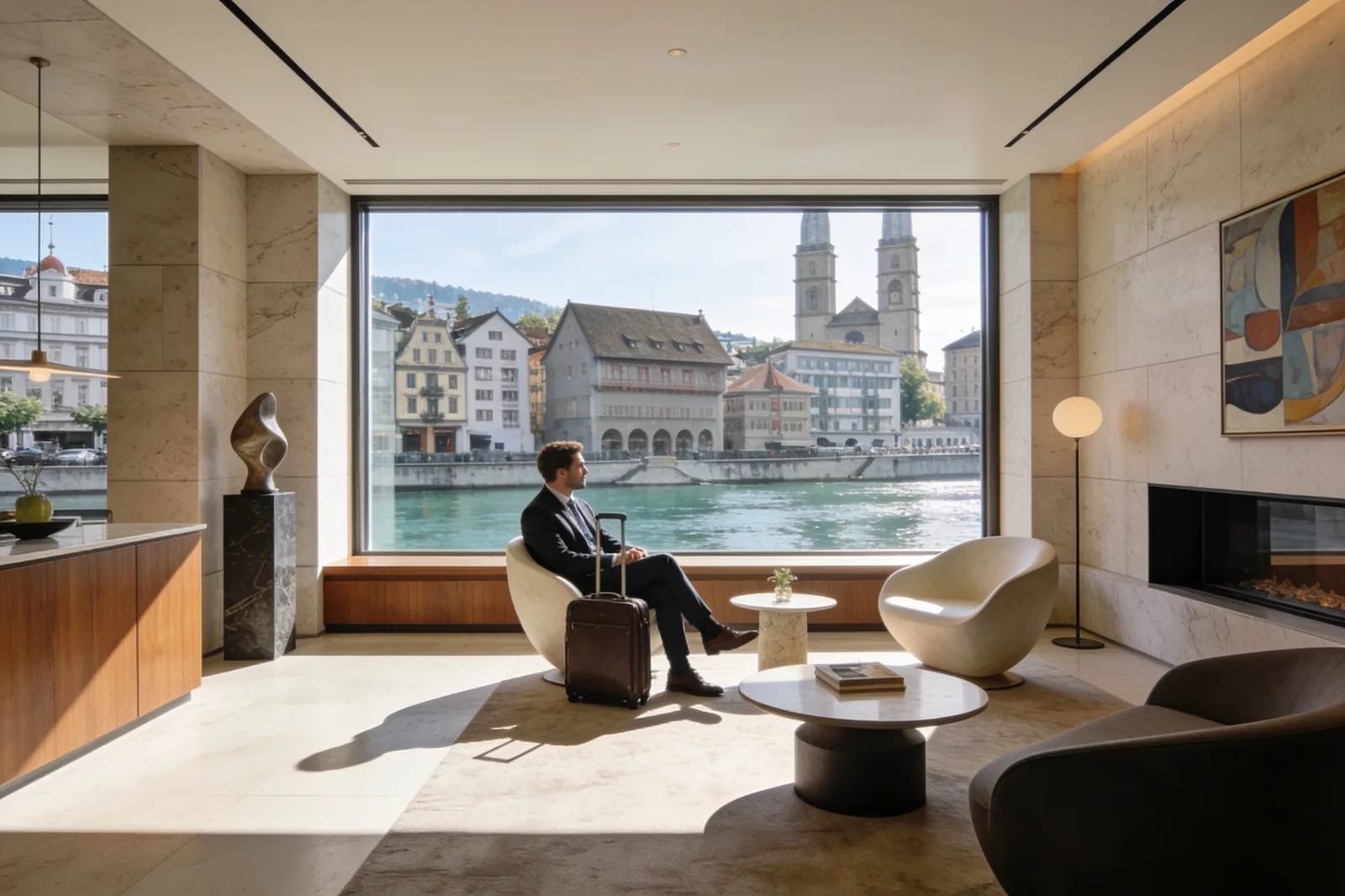
Design-led boutique hotels in Zürich are defined by adaptive reuse of historic buildings, named interior designers with traceable portfolios, and individual room characteristics that standard chains cannot replicate. Booking these properties requires moving beyond star ratings to curated platforms and verifying specific architectural credentials before reserving a room.
What defines a design-led boutique hotel in Zürich
The term "boutique" has become diluted. Many hotels now claim the label while offering little more than smaller room counts and generic styling. A truly design-led property in Zürich distinguishes itself through specific, verifiable qualities.
It is adaptive reuse where each room responds to the proportions, light, and structural remnants of its particular building.
Swiss precision appears in joinery, hardware, and the resolution of junctions between old and new fabric. Modern minimalism here means disciplined removal of everything that does not serve the spatial concept. Historic preservation is similarly selective, conserving what carries meaning rather than freezing buildings in arbitrary periods.
Standard luxury hotels, by contrast, prioritize consistency across properties. A design-led boutique accepts variation as a virtue. The room you book may differ substantially from the one shown in promotional photography, because each space is genuinely individual.
The Widder Hotel features 49 individually designed rooms and suites spread across five historic buildings.
How to find and book design-led properties
Finding these hotels requires moving beyond conventional booking filters. Star ratings and price sorts will not surface a hotel where only seven rooms exist, each designed by a different architect.
When using any platform, examine the filter architecture. Does it allow you to search by architectural period, designer name, or renovation date? Can you distinguish between "recently renovated" (cosmetic refresh) and "heritage conversion" (structural transformation)? These distinctions determine whether you book a property whose design merits the journey.
Human concierge services remain valuable for design-led bookings. A concierge who knows Zürich's hotel inventory can identify which rooms in a given property have the strongest architectural features, which face construction sites, or which were added in later phases with lesser attention. AI-assisted trip planning tools can accelerate initial research. For design-specific requests, direct communication with someone who has walked the properties yields better outcomes.
Always request specific room numbers or categories when booking. A generic label like "Superior double" tells you nothing. A description like "Room 304, corner bay with original parquet" tells you what you are paying for.
Hotel Locke am Platz is located in Zurich’s Enge quarter and surrounded by green parkland.
Once you have identified a shortlist, reach out to the property’s front desk or reservations team directly. Do not rely solely on automated chatbots or generic email templates. Ask specific questions about the room you intend to book. Inquire whether the listed square footage includes private terraces or if those areas are shared with adjacent rooms. Request confirmation on window orientation, as Zürich’s light shifts dramatically between north-facing courtyards and south-facing street views. If the staff cannot answer these spatial details confidently, it suggests the booking team lacks intimate knowledge of the building’s quirks.
Keep a record of these conversations. Note the name of the person who provided information and the date of the call. This trail serves as useful context if the assigned room upon arrival differs from what was described during the reservation process.
Timing your visit for design experiences
Zürich's cultural calendar creates natural rhythms for hotel demand. Understanding these patterns helps you secure both better rates and more meaningful stays.
Book three to four months ahead if film programming draws you. If design is your primary interest, the festival period offers energy but also crowds and premium rates.
However, the research does not establish that these events directly increase hotel rates or reduce availability. Treat them as planning possibilities rather than fixed obstacles.
Shoulder seasons, broadly April, May, September, and October outside festival dates, typically offer more favorable conditions for design hotel bookings.
Winter, particularly January through March, presents the quietest environment for experiencing interior spaces. Some properties offer packages during this period, though specific 2026 offers were not verified.
When evaluating seasonal packages, scrutinize what "design experience" actually includes. A legitimate offering might involve studio visits with local furniture makers, private viewings at the Kunsthaus or smaller galleries, or collaborations with Zurich-based designers. Vague promises of "design tours" without named participants or specific venues warrant skepticism.
Before finalizing dates, check local construction permits for the neighborhoods surrounding your candidate hotels. Zürich’s urban fabric is dense, and renovation projects often extend beyond hotel boundaries. A quiet side street can become noisy within weeks due to facade restoration or utility work. Visit the city’s public planning portal to review approved works near your chosen address. If significant exterior construction is scheduled during your stay, consider shifting dates or selecting a property further from the activity zone. Interior comfort depends heavily on external tranquility, especially in boutique settings where sound insulation may prioritize historic aesthetics over modern acoustic isolation.
Connecting your hotel to Zürich's cultural fabric
Location in Zürich is not merely logistical. It shapes what design elements your hotel can plausibly incorporate and what cultural access it enables.
The Old Town (Altstadt) offers the densest concentration of historic buildings adapted for hotel use. Staying here places you within walking distance of the Grossmünster, the Limmat quays, and the Bahnhofstrasse's upper reaches. Hotels in this zone often preserve medieval or early modern structural elements, exposed stone, timber framing, or irregular floor plates.
Kreis 4 and Kreis 5, the former industrial districts west of the main station, contain emerging design-oriented properties in converted factories and warehouses. The Greulich Design & Boutique Hotel sits in Kreis 4, near Langstrasse and the Bäckeranlage. These areas offer different spatial qualities: larger floor plates, higher ceilings, and more dramatic volume than Old Town conversions. The trade-off is greater distance from traditional tourist circuits and a more contemporary, less historic atmosphere.
The Enge quarter, south of the main station, provides a greener setting. Hotel Locke am Platz is located here, surrounded by parkland. Properties in this zone often emphasize views and quieter residential streets over urban intensity.
Lakeside locations along the Zürichsee introduce water as a design element: reflections, changing light, and the horizontal datum of the lake against vertical city fabric. These hotels tend toward modern construction or substantial historic villas rather than tight urban infill.
Your hotel should function as a gateway, not a refuge. Properties that actively connect guests to local culture through partnerships, printed guides, or staff knowledge deliver more than those that merely happen to be in Zürich. Look for evidence of ongoing relationships with nearby institutions, not one-time promotional arrangements.
Use the hotel’s concierge to arrange introductions rather than just bookings. Ask them to connect you with local architects or designers who might be available for brief walks or studio visits. Many professionals in Zürich maintain open calendars for informal exchanges with guests interested in their work. When requesting this, provide a clear statement of your interest so they understand the context. If the hotel has no established network, approach smaller galleries or design shops directly. They often host evening openings that welcome visitors without prior registration. Attending these events provides insight into current material trends and spatial thinking that informs the hotel’s own aesthetic choices.
Avoiding properties that only appear design-led
The design hotel market attracts imitators. Several checks help distinguish genuine curation from surface styling.
Verify designer credentials. A hotel that names its interior designer should have work traceable to that practice's other projects. Search the designer's portfolio for the hotel in question. Absence suggests the "design" was a purchasing decision, not a design process.
Examine photography critically. Wide-angle shots with dramatic lighting can make ordinary spaces appear exceptional. Look for detail images: how does the bathroom meet the bedroom floor? What is the quality of the door handle? How is the lighting controlled? These junctions reveal whether design thinking extended through the project or stopped at the renderings.
Read reviews for spatial specifics, not just service complaints. Guests at genuinely design-led properties often describe particular rooms, views, or architectural moments. Generic praise for "beautiful decor" without spatial specificity suggests the experience was pleasant but not architecturally engaged.
Check renovation dates and scope. A 2019 renovation with a named architect is different from a 2019 furniture refresh. Properties that do not clearly state what was done, by whom, and when are less likely to merit design-focused travel.
Finally, assess consistency between public spaces and rooms. Some hotels invest heavily in lobby impact while standardizing guest rooms. The design-led property distributes attention more evenly, because the concept governs the whole building.
Inspect the maintenance standards visible in common areas. Genuine design attention extends to how materials age and how wear is managed. Look at high-traffic zones like staircases and lobby floors. Are surfaces sealed properly? Is there evidence of regular upkeep or just superficial cleaning? Poorly maintained joinery or stained upholstery contradicts claims of rigorous design oversight. Additionally, observe the lighting temperature consistency across different spaces. Disjointed color temperatures suggest ad-hoc replacements rather than a unified lighting plan. These small operational details reveal more about the property’s commitment to design integrity than promotional brochures ever could.
Step-by-step booking checklist
- Define your design prioritiesDecide whether you prefer historic conversion, contemporary intervention, or a specific hybrid. Identify which Zurich neighborhoods suit your movement patterns. Establish must-have spatial qualities: natural light, water view, original structure exposure, or garden access.
- Search through curated platformsUse services that organize by design characteristics rather than star ratings. See hotels in Zürich on Hotel Curation to identify properties aligned with your priorities. Cross-reference with design publications for independent validation.
- Verify design credentialsIdentify the architect or interior designer. Review their other work. Check whether the property appears in design-focused editorial coverage from Wallpaper*, Condé Nast Traveler, or Hospitality Design, or in discussions of local character.
- Request specific room informationContact the property directly before booking. Ask which rooms have the strongest architectural features, which were renovated most recently, and which face undesirable conditions. Properties that cannot answer are less likely to be genuinely design-focused.
- Confirm cultural connectionsAsk about current partnerships with local institutions, designer collaborations, or cultural programming. Verify these independently where possible.
- Book with flexibility requestsReserve with explicit notes about your design interests. Request consideration for room upgrades that enhance architectural experience. Confirm cancellation terms in case the specific room category becomes unavailable.
- Document and verify on arrivalPhotograph the room on entry for comparison with booking representations. Note discrepancies immediately. If the property substitutes a standard room for a specifically requested design room, negotiate adjustment or relocation.
What to do next
Start your search with a clear statement of which design qualities matter most to you. Then See hotels in Zürich through a curated lens, cross-checking promising properties against independent design coverage and direct communication with the hotel. Book shoulder-season dates for greater room choice and rate flexibility. Plan your itinerary to move between your hotel's particular location and the cultural institutions, studios, and scenery that make Zürich a design destination in its own right.
Key points for your booking
- Design-led means individually crafted rooms with named designers and architectural heritage, not just small scale and styled interiors.
- Verify credentials through independent design publication coverage and traceable designer portfolios.
- Use platforms with design-specific discovery rather than generic star and price filters.
- Request exact room numbers or categories; avoid vague booking categories that obscure what you will receive.
- Time visits for shoulder seasons or winter quiet, with awareness of festival-period demand spikes.